
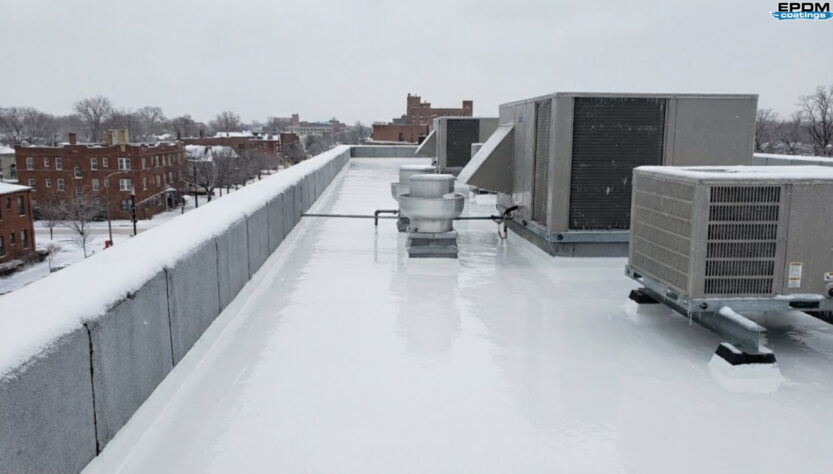
Winter has a way of catching you off guard. One day you’re enjoying the crisp fall air, and the next thing you know, temperatures are dropping fast and snow’s piling up on your roof. That’s when the panic sets in—you notice a dark stain spreading across your ceiling, or water dripping into your attic. Roof leaks don’t care about your schedule, and they definitely don’t wait for spring.
Here’s the thing most people don’t realize: you don’t have to live with a leaking roof all winter, and you absolutely don’t need to spend $20,000+ on a complete roof replacement. There are actually practical solutions that work right now, even in freezing temperatures.
Why Winter Makes Roof Problems So Much Worse
Think about what happens to your roof during winter. Snow sits there, getting heavier by the day. The sun comes out for a few hours, temperatures rise above freezing, and water starts seeping into any tiny crack or gap. Then night falls, temperatures plummet, and that water freezes solid. When water freezes, it expands by about 9%, widening those cracks. It’s like nature’s way of making a bad situation worse, night after night.
This freeze-thaw cycle is brutal on flat and low-slope roofs. Unlike pitched roofs, where snow slides off, your roof becomes a holding tank for accumulated moisture. Ice dams form, water pools in spots it shouldn’t, and before you know it, your insulation is soaked, mold’s starting to grow, and you’re looking at severe interior damage.
The weight alone is concerning, too. Heavy, wet snow combined with standing water places significant stress on your roof structure. Even durable materials have their breaking point.
You Don’t Actually Need to Replace Your Whole Roof
I get it—when you discover a leak, your first thought is probably, “Oh no, I need a new roof.” The price tag alone makes you want to cry. But here’s what’s changed in recent years: modern restoration coatings actually work.
Instead of ripping off your entire roof system (which is nearly impossible in winter anyway), you can apply a specialized liquid coating that repairs and seals your existing roof. It’s not a temporary patch that fails next season. A quality epdm roof sealant can give your roof an extra 18 to 20 years of life—way better than traditional coatings that peter out after just four or five years.
Plus, there’s no massive disruption. You’re not having crews tearing apart your roof for weeks. The work gets done quickly, there’s minimal mess, and you’re protected before the next storm hits. For anyone who needs to stay in their home or keep their business running, this is a game-changer.
Understanding Butyl Rubber—Why It Actually Works in Cold
Not all roof coating products are created equal, especially when you’re dealing with freezing temperatures. This is where butyl rubber formulations really shine.
Here’s the key difference: most water-based coatings freeze solid when temperatures drop. They crack, they fail, and you’re right back where you started. Liquid butyl rubber, on the other hand, is solvent-based. It stays flexible even when it’s brutally cold outside. When your roof expands and contracts with temperature changes—and it does so constantly in winter—this flexibility prevents the coating from cracking or splitting.
The way it bonds to your roof is pretty cool, too. As it cures, the coating expels air bubbles and forms a chemical bond with your existing surface. It’s not just a paint-like finish; it becomes part of your roof system. That molecular-level adhesion is what makes it last.
The specifications support this as well. A single coat gives you 20-mil thickness—the same protection you’d get with two or three coats of inferior products. The cured membrane can stretch up to 500 percent without tearing. When summer heat or winter cold tries to flex your roof, that elasticity prevents the kind of failure you see with cheaper alternatives.
How to Actually Fix Your Roof in Winter (Step by Step)
All right, let’s get into the process. Doing this right makes all the difference between a repair that lasts and one that falls apart in six months.
Start with a thorough inspection. Walk your entire roof and actually look at what you’re dealing with. Check every seam in your epdm roofing membrane. Look around chimneys, vents, and any penetrations where leaks love to hide. Look for caulk that’s cracked or hardened—that’s often where water gets in. On epdm rubber roofs, check for areas where the membrane is lifting or peeling. Even small punctures can cause significant problems if ignored.
Clean everything properly. This step is non-negotiable. You need a specialized roof cleaner that effectively removes dirt, oil, grease, mildew, and other contaminants from your roof. If there’s a layer of contamination between your coating and the roof, it won’t bond properly, and your repair will fail. If there is heavy snow or ice, clear it thoroughly and ensure the area is dry. A heat gun speeds this up in cold weather.
Fix the damage before you coat. Any gaps, tears, or holes bigger than 1/16 inch need attention first. For damaged seams—which are common failure points on epdm roofing—apply an eight-inch strip of sealant and press poly fabric into the wet coating. Use butyl rubber tape on separated seams to prevent them from reopening over time.
Apply your coating. A quality roof sealant covers about 50 square feet per gallon. Use a 3/8-inch nap roller—foam rollers don’t spread the coating evenly. Mix it thoroughly with an electric drill for about five minutes to get even distribution.
Here’s where winter actually works in your favor: ideally, apply when temperatures are at least 50°F and rising. But here’s the key point—if temperatures drop after you use it, solvent-based formulations go dormant. They wait. Once it warms back up, they resume curing as if nothing happened. This means you can actually tackle emergency repairs well into late fall and early winter without compromising results.
Let it cure properly. When temperatures are above 50°F, quality coatings become waterproof in three to four hours and fully cure in eight to 10 hours. That’s genuinely fast—you can have protection in place before the next storm. If you’re coating an RV roof, wait a full 24 hours before driving. When building roofs, avoid the area for at least 48 hours.
Keep an eye on things. After major snowstorms, check your roof for pooling water or any new issues. The flexibility of properly applied EPDM roofing coatings allows them to withstand extreme temperature swings year after year without failing.
Special Situation: RV Roof Leaks in Winter
If you’re dealing with an RV emergency, the stakes feel different because you’re mobile. RV roofs are lighter, absorb vibration from travel, and present their own set of challenges.
The good news? Specialized RV roof sealant formulations handle all of this. They work on EPDM, TPO, fiberglass, metal, vinyl—basically any roof type. You get the same solvent-based durability and flexibility as butyl rubber, but optimized for mobile environments.
The one-coat application with no primer needed is enormous. You apply it today and can drive away tomorrow. When you’re stuck somewhere dealing with an emergency leak, this matters more than you’d think.
Why Spending Money Now Saves Way More Later
I know it doesn’t feel good to spend money on a roof repair in January. But think about what happens if you ignore that leak. Water enters your insulation, mold grows, interior finishes are damaged, and structural components deteriorate. A $500 emergency repair in January? That prevents a $15,000 restoration project from coming this spring.
Plus, high-quality roof sealant can extend your roof’s life by nearly two decades. You’re effectively deferring a significant replacement expense—$20,000 to $50,000 for commercial buildings, $8,000 to $15,000 for residential homes. Getting reliable protection against UV damage, standing water, and temperature extremes while you buy yourself 18-20 extra years? That math makes sense.
Contractors have recommended liquid butyl rubber formulations for over 25 years because they deliver results. Products with 30-year track records in the industry aren’t trendy—they’re proven. That matters when you’re investing.
Quick Answers to What You’re Actually Wondering
Can I really apply this stuff when it’s freezing?
Yeah, absolutely. Solvent-based formulations go dormant when temperatures drop and resume activity when they warm. Late fall and early winter projects are entirely doable. You get protection in place before the worst weather hits.
Do I really need a primer?
Nope. Quality liquid butyl rubber products can be used without primer. This saves time, money, and a whole step, which matters when you’re dealing with emergencies.
What roof types does this work on?
Liquid butyl rubber handles EPDM rubber, TPO, built-up roofs, metal, fiberglass, and previously coated surfaces. The exceptions are PVC roofs and anything with silicone coatings—those need different approaches.
The Bottom Line
Winter roof leaks don’t have to destroy your budget or stress you out for months. Modern EPDM roofing coating technology and liquid butyl rubber formulations enable you to restore your roof quickly and affordably without replacing the entire roof.
Whether you’re protecting a house, commercial building, or RV, the process is the same: proper preparation, quality cold-weather products, and straightforward application. Get it done right, and you’ll have peace of mind knowing your roof can handle whatever winter throws at it. Stay warm, stay dry, and tackle this before spring rolls around.
Visit epdm coatings product store or call us at 610-298-1989 to place an order.