
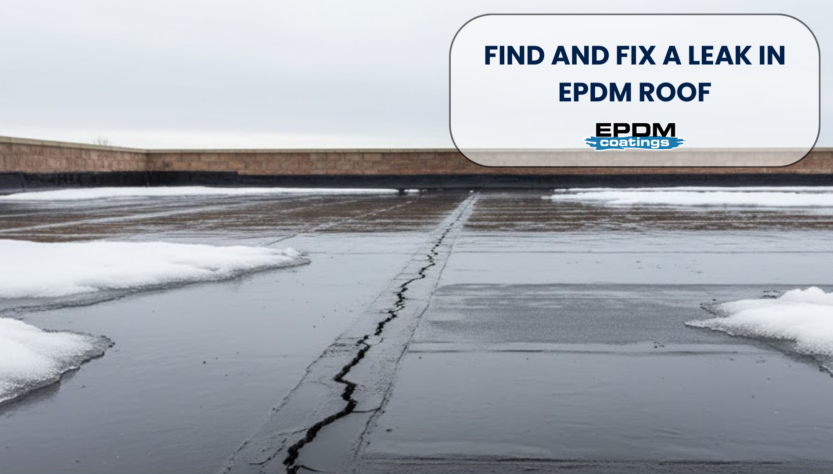
Late winter is when EPDM roofs quietly start telling you something is wrong. Snow melts. Water moves. Temperatures drop at night. That freeze-thaw cycle is rough on seams and flashing. If you’re seeing a ceiling stain or a damp smell in the attic, don’t ignore it. Small EPDM leaks rarely stay small once spring rain shows up. Let’s walk through this calmly and correctly.
First – Finding the Real Source
With flat roofs, the drip inside is rarely directly below the leak. Water travels. It can run along insulation or framing before it shows up on your ceiling. That’s why you need to inspect the roof carefully instead of guessing.
Look for:
- Seams that are starting to separate
- Flashings around vents or skylights that look dried out
- Areas where water sits longer than 48 hours
- Surface cracking (often called “alligatoring”)
- Small punctures from foot traffic
If water regularly sits in one spot, pay attention. Ponding water speeds up wear, especially if the roof is aging. Take your time here. Finding the real source saves frustration later.
Why Liquid Butyl Rubber Is Commonly Used on EPDM
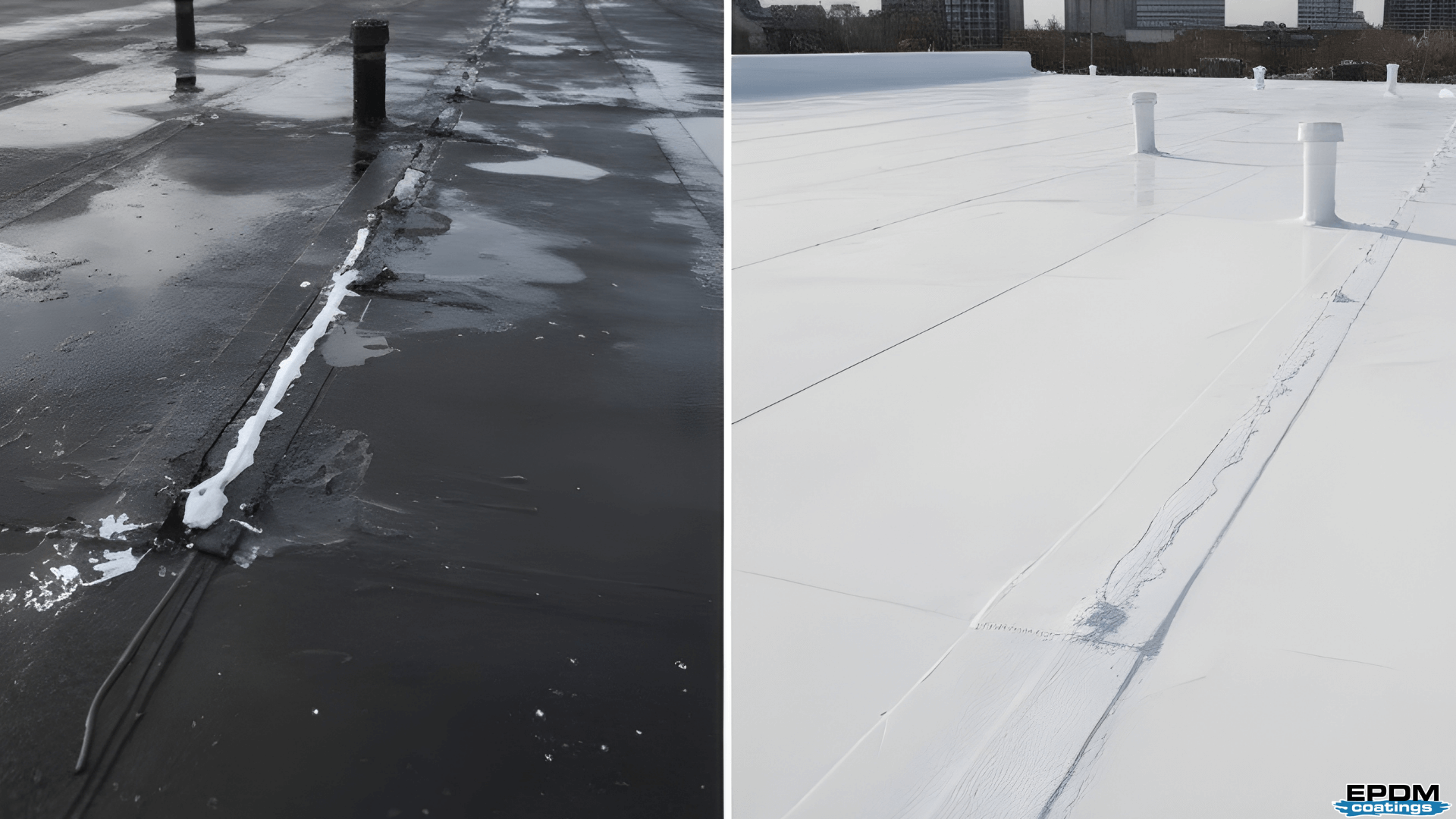
EPDM is a rubber membrane. So whatever you repair it with needs to behave like rubber. Roof Coatings adheres well to EPDM because it chemically bonds to the membrane rather than simply sitting on top of it. That chemical bond is important – especially in late winter when the roof is expanding and contracting almost daily.
It’s also:
- Applied in one coat
- Typically installed at about 20 mil thickness.
- Spread at roughly 50 square feet per gallon on smooth surfaces.
- Waterproof within a few hours when temperatures are above 50°F
- Fully cured in 8–10 hours under proper conditions.
- Flexible enough to tolerate significant temperature swings
That flexibility matters. A repair that can’t move with the roof will eventually fail.
How to Apply a Liquid Roof Coating Successfully?
Step 1: Preparation (This Is Where Most Problems Start)
The surface must be clean and dry. Remove debris. Remove oxidation. Remove grease or mildew.
If the roof is damp, wait.
Liquid rubber roof coatings need proper surface conditions to bond correctly. If possible, apply when temperatures are above 50°F for at least three hours. After that, even if temperatures drop at night, the curing process will simply pause and resume the next day when it warms up again.
Step 2: Reinforce Seams and Weak Areas
If you find seams that are slightly open, don’t just roll the coating over them. Use compatible butyl caulk. If gaps are larger than 1/16 inch, reinforce them with seam tape or polyester mesh before coating. Think of this as strengthening the structure before sealing it. When seams are properly reinforced, the final coating becomes a continuous membrane across the surface.
Step 3: Apply at the Correct Thickness
Thickness matters more than most people realize. For smooth EPDM, one gallon should cover about 50 square feet to achieve the recommended 20 mil dry film thickness. If you stretch it too thin, you reduce long-term durability.
Applied correctly, the coating:
- Self-levels into a seamless membrane
- Resists ponding water
- Remains flexible in freezing and high-heat conditions
- Protects against UV exposure
This isn’t just covering a crack – it’s restoring the waterproof surface.
Patch or Coat the Whole Roof?
If you’ve found one leak, it’s worth asking whether other seams are aging too. Sometimes a targeted repair is enough. Other times, coating a larger section — or the entire roof — provides better long-term peace of mind. A full 20-mil application helps encapsulate seams and reduce future maintenance. There isn’t a one-size-fits-all answer. It depends on the roof’s age and condition.
Why Late Winter Is a Smart Time to Act
Late February and March are often ideal because:
- You’re ahead of heavy spring rain.
- Temperatures are starting to cooperate.
- You avoid peak-season contractor delays.
Just make sure the weather gives you a proper application window.
Final Thoughts
EPDM roofs are durable, but like anything exposed to weather year after year, they eventually need attention. If you approach it properly – a clean surface, reinforced seams, and the correct thickness – a liquid butyl rubber coating can restore the integrity of the membrane and extend the life of the roof.
Take your time. Do it once. Do it correctly. Use Liquid Butyl Rubber designed for EPDM, and you will sleep soundly through the next storm. And if you’re unsure about your specific situation, it’s always better to ask questions before applying anything.