
A metal sunroom roof can last for years without causing much trouble. Then, one rainy afternoon, you notice a dark mark near the ceiling. Maybe there is a small drip running down the wall, or perhaps the room smells damp after a storm.
It is tempting to assume the entire roof has failed. In many cases, though, the problem begins with something much smaller: an aging seam, loose fastener, worn flashing, or old caulk that has pulled away from the metal.
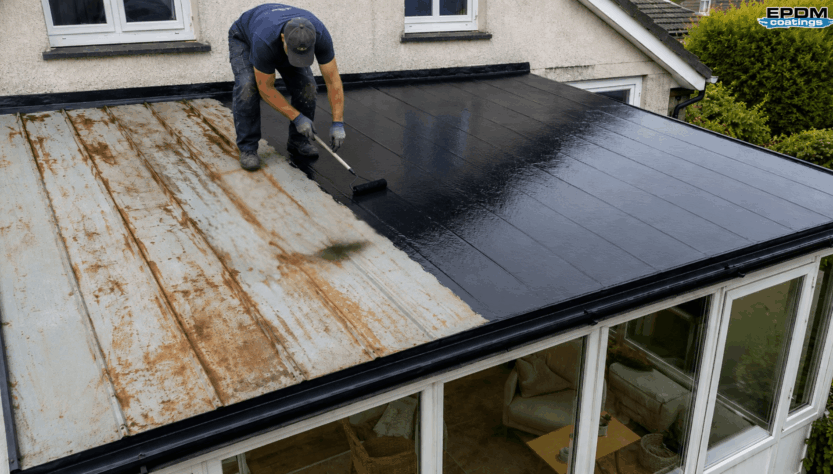
When the panels and the supporting structure are still in usable condition, replacing the whole roof may not be necessary. A thorough inspection, careful surface preparation, and the right roof coating can help restore the existing roof and create a waterproof surface. The coating is only one part of the job, however. The real work begins before the container is opened.
Why Metal Sunroom Roofs Eventually Develop Leaks
Metal roofing reacts to temperature changes throughout the year. The panels warm up in direct sunlight, cool down after sunset, and move slightly as the temperature rises and falls.
That movement may not be noticeable from inside the sunroom, but it can gradually affect seams, screws, flashing, caulk, and older repair materials.
A fastener may loosen just enough to let moisture enter. A bead of caulk that looked fine several years ago may become hard and brittle. Water may also collect in a low area and remain there longer than expected.
Rust can create another problem. Once the original finish becomes scratched or worn, exposed metal may begin to corrode. Light surface rust does not always mean the roof is beyond repair, but loose or flaking rust must be removed before applying a new waterproofing material.
Leaks are frequently found near panel overlaps, fasteners, flashing, roof edges, old patches, and the point where the sunroom roof meets the main building. There is also a frustrating detail worth remembering: the drip inside may not be directly below the opening outside.
Rainwater can enter through a small gap, travel along the underside of a metal panel, and appear in another part of the room. Looking only above the interior stain could cause you to miss the real source of the leak. A successful roof repair, therefore, should start with an inspection of the entire roof.
A Patch May Stop One Leak, but Not the Next One
If you find a single loose screw or a small open gap, a local repair may be enough. Older metal roofs, however, often have several weak areas developing at roughly the same time.
You may repair one seam before a storm and then find moisture near another panel a few weeks later. That does not necessarily mean the first repair failed. It may simply mean the rest of the roof is ageing too. This is where repeated patching can become frustrating.
A patch treats one specific location. A full liquid coating covers the prepared roof as a continuous surface, including repaired seams, fasteners, flashing, and weathered metal.
liquid butyl rubber is applied in liquid form and cures into a seamless membrane. Because it flows around roof details, it can cover areas that would be difficult to protect using a sheet material.
EPDM Coatings lists weathered galvanised metal, aluminium, weathered copper, and appropriately aged Galvalume among the metal surfaces that may be coated. When the exact metal or an existing finish is unknown, a small adhesion test should be performed before coating the entire roof. That small test can save a great deal of work later.
What Makes Liquid Butyl Rubber Suitable for Metal Roofing?
A metal roof does not remain perfectly still. It moves with temperature changes, and a coating placed over it needs enough flexibility to handle that movement.
Liquid Butyl Rubber creates a flexible membrane once cured. EPDM Coatings reports an ASTM-tested elongation of 500% and a tensile strength of 1,520 PSI. The product has also undergone testing for wet adhesion to metal, weathering, fungal resistance, low-temperature flexibility, and wind-driven rain.
It is designed to withstand ponding water after it has fully cured. This may be particularly useful on an older sunroom roof that has a slight low spot where rainwater tends to remain.
People sometimes search for an epdm roof sealant when they actually need more than a bead of material around one joint. A sealant helps fill selected seams or gaps, while a complete coating protects the surrounding roof surface as well.
In practice, the two approaches may be used together. Damaged gaps and details are repaired first, and then the coating is applied over the properly prepared roof.
Start by Finding Out What You Are Working With
Before cleaning or coating anything, spend time checking the roof’s condition. Look for loose panels, missing screws, corroded fasteners, brittle caulk, open seams, damaged flashing, and old repair materials. Pay close attention to where the sunroom roof meets the house, because transitions often become vulnerable as materials age.
Check the underside of the roof when it is accessible. Signs of damaged framing, severe corrosion, or movement in the supporting structure should not be covered and forgotten.
A liquid coating can restore and waterproof a stable roof surface. It cannot rebuild damaged framing or make severely deteriorated metal structurally sound.
Loose panels must be secured. Badly damaged sections may need to be replaced. Large holes and serious corrosion should be repaired before waterproofing begins.
Old Repair Material May Need to Come Off
Old sunroom roofs often tell a story through their previous repairs. You may find several types of caulk, patches, roof cement, paint, or silver coating. Some may still be securely attached. Other materials may lift easily with a scraper.
Anything loose, brittle, flaking, or poorly bonded should be removed. Applying a new coating over unstable material does not make the layer underneath stable. It only hides the problem for a while.
EPDM Coatings advises removing asphalt-based aluminum coatings as thoroughly as possible. Silver asphalt products must be completely removed before Liquid Butyl Rubber is applied.
Silicone must also be handled carefully. Liquid Butyl Rubber should not be applied over a silicone coating. Existing silicone caulk should be removed and replaced with a compatible butyl or acrylic caulk.
This part of the job can take patience, but it is far better to discover incompatible material during preparation than after the whole roof has been coated.
Deal With Rust, Screws, Seams, and Gaps
Surface rust should be wire-brushed to remove loose oxidation. Rust that remains firmly attached may be coated, but flaking corrosion cannot be left underneath the new membrane.
Inspect every fastener while working across the roof. Tighten any that have become loose and replace screws that are heavily rusted or no longer holding securely.
Gaps wider than 1/16 inch should generally be caulked before the main coating is applied, provided they are not intentional slip areas designed to allow expansion and contraction. Old roof cement may also need to be removed and replaced with compatible butyl caulk.
Take your time around panel overlaps, flashing, edges, and corners. These details may occupy only a small portion of the roof, but they are often the places where water first gets inside.
Cleaning the Roof Is Not an Optional Step
It is easy to look at a metal roof and think, “It only needs a quick rinse.” Usually, it needs more than that. Grease, mildew, dirt, oil, chalky residue, and loose rust can interfere with adhesion. Even a roof that looks relatively clean may have contamination around fasteners, low areas, or the edges of old repairs.
roof protect cleaner is intended for preparing roofing surfaces before Liquid Butyl Rubber is applied. It helps emulsify grease, oil, mildew, dirt, and other materials that could prevent the coating from bonding properly.
For initial cleaning, EPDM Coatings recommends mixing the cleaner with water at a 1:5 ratio. Wet the roof, scrub it with a soft-bristle brush, and rinse the surface thoroughly. One gallon of Roof Protect Cleaner can cover approximately 500 square feet.
After rinsing, allow the metal to dry completely. Do not judge dryness only by looking at the open areas. Moisture can remain around seams, under raised edges, and beside fasteners. Coating over trapped water can lead to bubbling or poor adhesion.
Smooth Metal May Need a Little More Preparation
Some metal surfaces are extremely smooth. In those cases, the roof may need to be lightly roughed up so the coating has a better surface to grip. The goal is not to grind deeply into the metal. It is simply to reduce the slick finish and create a suitable surface profile. Remove all dust and sanding residue afterward. If necessary, clean the roof again and let it dry before moving forward.
If you are unsure about the existing paint, coating, or type of metal, apply a small test patch. Allow it to cure and check the bond before committing to the full roof.
Apply the Coating Like a Roofing Product, Not Paint
Liquid rubber should not be spread in a thin decorative layer. Liquid Butyl Rubber should be applied at approximately 20 mils. On a smooth surface, one gallon covers roughly 50 square feet.
Before application, mix the premeasured catalyst according to the product directions. Once the material has been mixed, pour it onto the roof, spread it with a squeegee, and smooth it using a fine- or short-nap roller.
A brush can be used around seams, flashing, corners, fasteners, edges, and other detailed areas. Slow brush strokes help work the material into locations that are difficult to cover with the roller.
One correctly applied coat is preferred to several thin coats. When enough material has been applied, the product begins to level itself across the surface.
Trying to stretch one gallon across too much roof may save material in the moment, but it can leave the finished membrane thinner than intended.
Weather Conditions Matter During Application
Choose the application day carefully rather than simply starting when you have a free afternoon. The roof should be dry, and daytime temperatures should be at least 50°F for proper curing. If temperatures fall below that level, the curing process pauses and continues when warmer conditions return.
Because the coating is solvent-based, unexpected light rain a few hours after application will not wash it off. The curing process can continue after the water has evaporated.
EPDM Coatings recommends removing standing water from ponding areas approximately eight hours after application. This helps those sections dry and continue curing properly. The finished roof should be given its full curing period before normal use.
The Most Common Reason a Coating Job Fails
In many cases, the problem is not the coating itself. It is what was left underneath it. Coating over dirt, loose rust, silicone, grease, brittle caulk, standing moisture, or badly bonded repair material can weaken the finished result.
Another common problem is applying too little material. Liquid roof coating has a recommended coverage rate for a reason. It should not be rolled out as thinly as possible to make the material go farther.
It is also a mistake to expect a liquid membrane to solve structural problems. Loose panels, severe rust, damaged framing, and large holes need proper repair before the roof is waterproofed. Preparation takes longer than rolling the coating, but it is also what gives the coating a reliable surface to bond to.
An Old Metal Roof May Still Have Plenty of Life Left
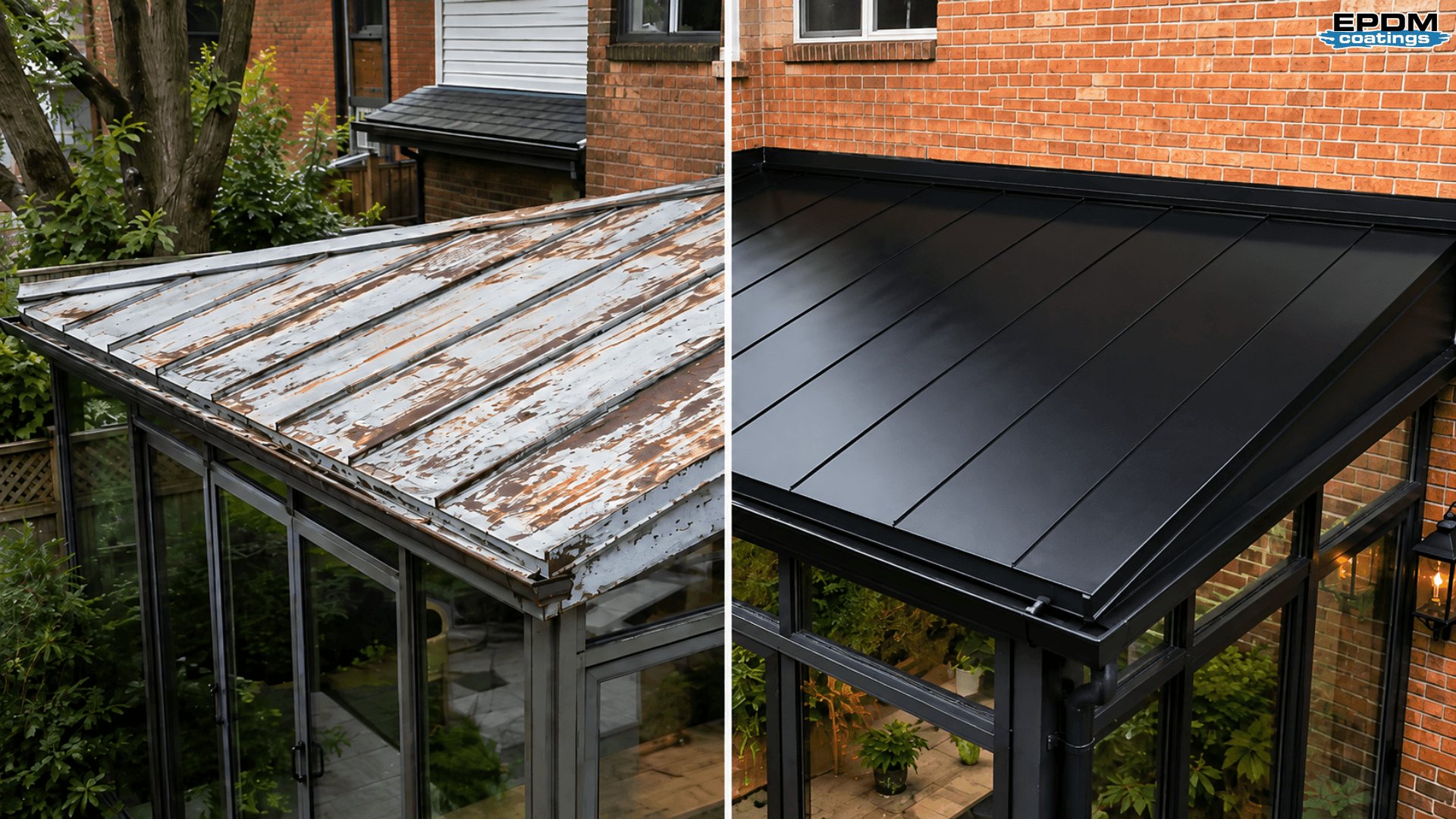
Finding water in a sunroom does not automatically mean the metal roof must be removed. If the panels and supporting structure are still sound, the roof may be restored by removing failed materials, treating rust, securing loose fasteners, sealing open gaps, cleaning the surface, and applying Liquid Butyl Rubber at the recommended thickness.
The finished membrane follows the existing shape of the roof and protects seams, fasteners, flashing, and weathered metal together.
The process is not difficult, but one step is complicated. It requires care because several small details matter. A loose screw matters. A narrow open seam matters. A patch of silicone matters. Moisture left near the flashing matters.
Taking care of those details before applying the roof coating gives the finished membrane a much better chance of performing as intended. More importantly, repairing the roof early can help prevent a manageable drip from turning into damaged walls, stained ceilings, or deteriorated framing.