
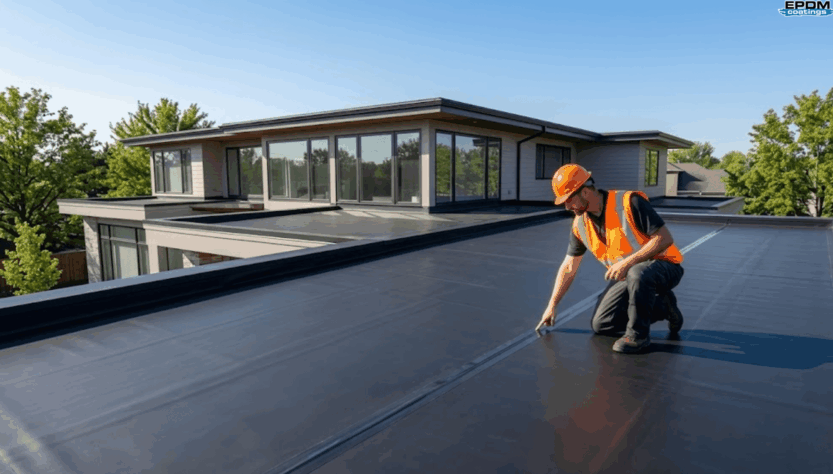
Your roof is the ultimate unsung hero. It sits up there 24/7, taking a beating from the sun, rain, and snow, so you don’t have to. When it comes to flat or low-slope structures, EPDM (Ethylene Propylene Diene Monomer) is the gold standard, but even the toughest materials eventually get “tired.” If you’ve ever found yourself balancing on a ladder with a flashlight, trying to find a “mystery leak” after a midnight thunderstorm, you know exactly how frustrating reactive maintenance can be.
The secret to a stress-free roof isn’t just buying more patches; it’s about upgrading the chemistry of the roof itself. By using high-grade rubberized roof coating, you’re essentially shrink-wrapping your building in a seamless, protective skin. Here is a down-to-earth guide to maintaining your EPDM roof using the methods and products we’ve perfected at EPDM Coatings.
1. The Power of a Clean Slate
Before you can protect your roof, you actually have to see it. Over time, dirt, pollen, and environmental pollutants build up, creating that annoying “chalky” residue. This isn’t just an eyesore—it actually traps heat and moisture against the membrane.
For standard flat roofs (and especially RV EPDM systems), a good scrub four times a year is the sweet spot. But here’s the most important rule: Stay away from petroleum. If a cleaner contains petroleum distillates, it will cause your rubber to swell, warp, and eventually fall apart. Instead, use a specialized, rubber-safe product like roof protect to lift the grime without hurting the roof’s structural integrity.
2. Why “Seams” Are Usually the Culprit
If you look at where most roofs fail, it’s rarely in the middle of a solid sheet. It’s at the joints. Traditional EPDM relies on adhesives and tapes to hold sections together. Over time, UV rays bake these glues until they’re brittle. Once the wind picks up or the building shifts slightly, those seams start to lift, and that’s when the water moves in.
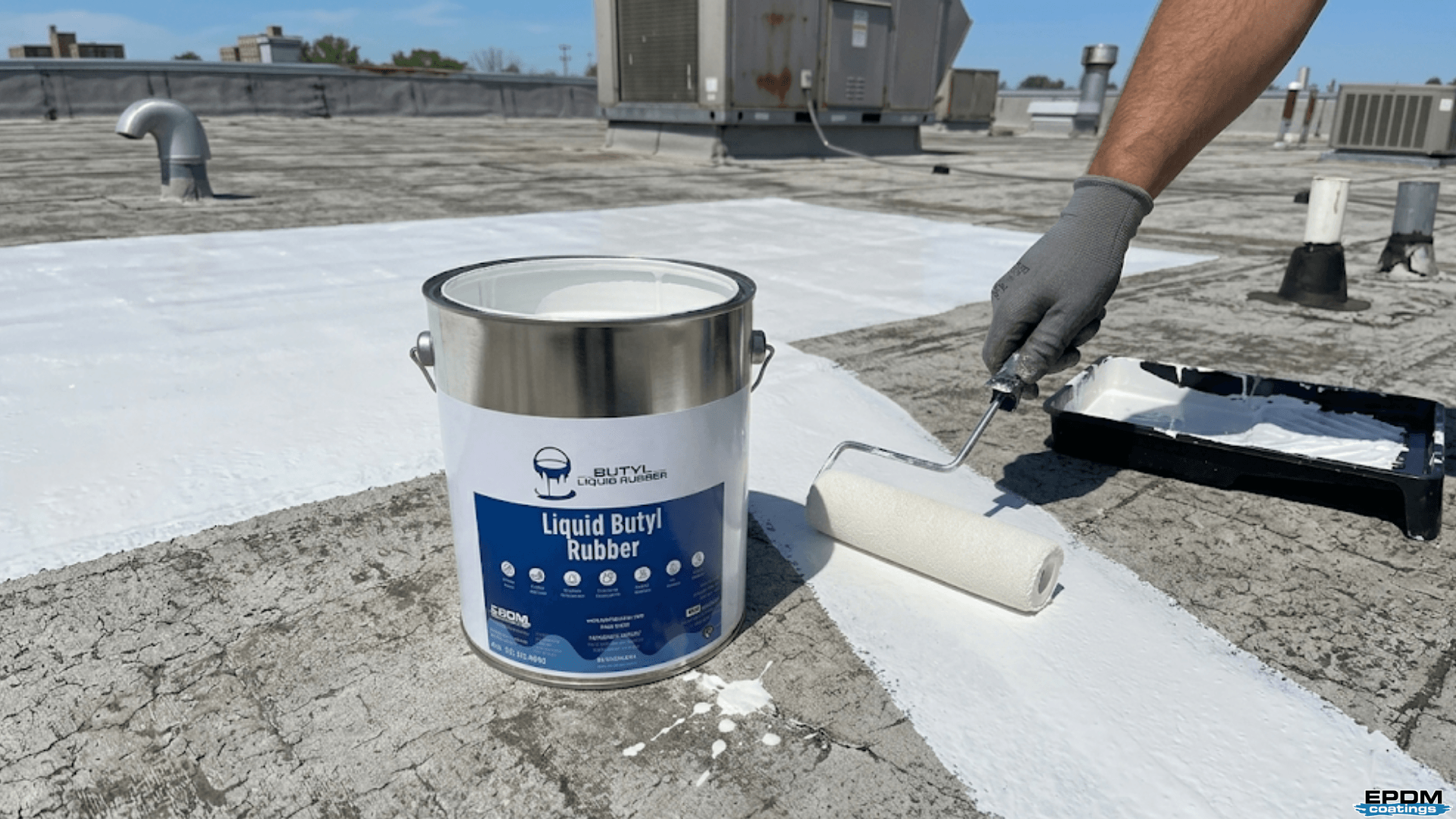
This is exactly why elastomeric coatings are such a game-changer. Unlike rolled-out sheets, a liquid application flows into every tiny crack and crevice, curing into one solid, monolithic sheet. When you eliminate the seams, you eliminate the “weak links” where 90% of roof leaks begin.
3. The Headache of Ponding Water
Flat roofs are famous for “ponding” – those stubborn puddles that sit for days after the rain stops. If you use a cheap, hardware-store acrylic coating, standing water is a death sentence. It causes the coating to “re-emulsify,” which is just a fancy way of saying it turns back into a liquid and peels away.
Our Liquid Butyl Rubber is a solvent-based thermoset, meaning once it’s cured, it couldn’t care less about water. Whether a puddle sits there for two hours or two weeks, the membrane won’t soften or fail. This makes it the ultimate roof leakage repair solution for roofs with poor drainage or slight dips.
4. Understanding the “Rubber Band” Effect
Buildings aren’t static; they move. They expand in the summer heat and shrink when the temperature drops at night. If your roof coating is rigid, it’s going to crack – it’s just a matter of time.
EPDM liquid rubber is engineered with a 500% elongation rate. Think of it like a giant, industrial-strength rubber band stretched over your roof. It handles “thermal shock” without breaking a sweat. This flexibility is the main reason a single application can last 18 to 20 years without needing a touch-up.
5. SPF for Your Building
The sun is essentially trying to “cook” your roof every day. UV radiation makes traditional materials brittle and flaky. By applying a white liquid rubber coating, you’re giving your building a massive dose of sunblock.
These coatings reflect up to 85-90% of the sun’s rays. This does more than save the rubber; it can drop your roof’s surface temperature by up to 70°F. That’s a massive difference that you’ll actually feel in your AC bills and see in the lifespan of your HVAC units.
How to Apply It Like a Pro
If you’re tired of the “patch and pray” method and want a permanent fix, here’s the workflow:
- Prep is Everything: The surface must be clean and bone-dry. Use a medium-bristle brush for tough stains and a high-pressure rinse to clear out the hidden debris.
- Focus on the Flashings: Pay extra attention to vents, chimneys, and skylights. These are high-risk zones. For big gaps, use a reinforced fabric with the coating to create a bridge that’s stronger than the original roof.
- The Mix: Our Liquid Butyl Rubber comes with a catalyst. Use a drill mixer to blend it perfectly. This chemical reaction is what allows the product actually to fuse to your existing roof.
- One Pass is Enough: Unlike water-based systems that make you do a primer, a base, and a top coat, our system is usually a one-and-done deal. You get the full thickness you need in one pass.
Restoration vs. Replacement: Don’t Tear It Off!
Many people think that a few leaks mean they need to spend $20,000 on a total roof replacement. That’s usually not true. A total tear-off is loud, messy, and incredibly expensive.
Restoring your roof with a rubberized roof coating can save you about 50% of the cost of a replacement. Plus, it’s better for the planet—you aren’t sending tons of old rubber to a landfill. If your roof is structurally sound but just aging out, restoration is the smarter move.
The Bottom Line
At the end of the day, you want a roof you don’t have to think about. When you choose a solvent-based elastomeric coatings solution, you’re investing in something that outlasts the competition by a mile.
Stop playing “find the leak” every time the clouds turn grey. With a single application of Liquid Butyl Rubber, your maintenance for the next two decades can be as simple as clearing the leaves out of the gutters.
Ready to fix it for good? Check out our professional roof leakage repair kits and see why thousands of property owners trust EPDM Coatings to keep them dry. Visit us today, and let’s get that roof back in tip-top shape.