
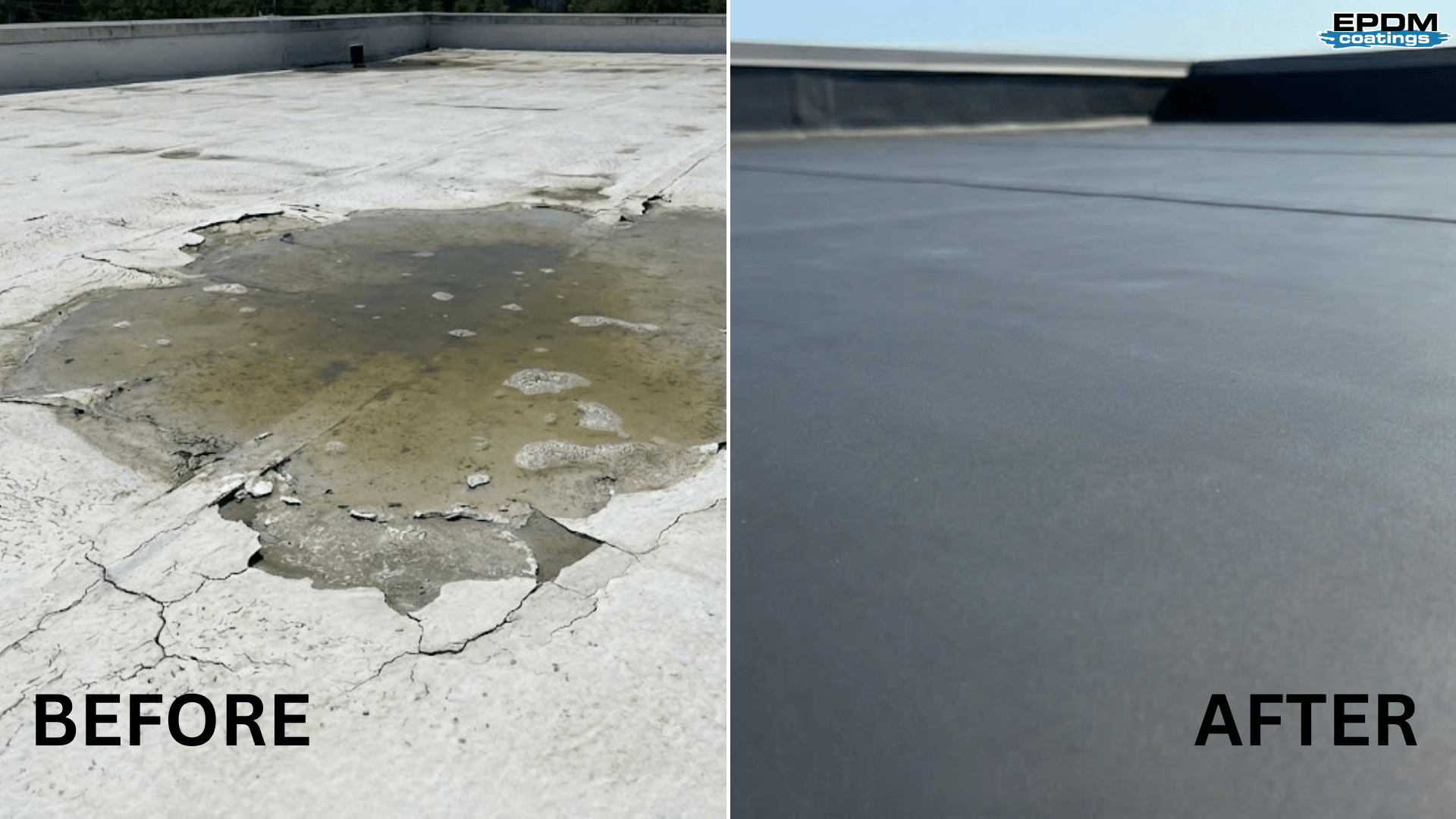
A roof leak usually starts quietly. Maybe it is a small crack near a seam, a damp spot after heavy rain, or a low area where water keeps sitting longer than it should. At first, it may not seem urgent. But once water finds a path beneath the roof surface, the repair can become much larger than expected.
That is why many building owners look for a roof coating that does more than cover the surface for a season. They want something durable, waterproof, and simple enough to maintain without constant patching. This is where liquid butyl rubber roof coatings become a practical solution, especially for flat and low-slope roofs.
EPDM Coatings offers Liquid Butyl Rubber for residential and commercial roofing applications. It is designed to help prevent leaks, protect ageing roof surfaces, and extend roof life without immediately requiring a full roof replacement. For anyone searching for a long-term epdm roof sealant, Liquid Butyl Rubber gives property owners a strong option for restoring and protecting their roof.
Why Liquid Rubber Works So Well on Roofs
A roof is never completely still. It expands in heat, contracts in cold, collects water in low spots, and faces sunlight, wind, debris, and seasonal weather changes. A coating that becomes too rigid can crack as the roof moves. A coating that cannot handle standing water may soften or peel in ponding areas.
Liquid Butyl Rubber is built differently from standard water-based coatings. EPDM Coatings explains that its solvent-based system chemically cross-links during curing. Instead of simply drying on top of the roof like a paint film, the coating forms a chemical bond with the surface. Once cured, it creates a smooth, seamless membrane.
That seamless finish is one of the biggest benefits. Seams are common leak points on many roofs. When liquid rubber is applied properly, it flows across the roof surface and helps encapsulate those vulnerable areas. As it dries, roller marks disappear, leaving behind a continuous protective layer.
Built for Waterproof Protection
Flat roofs often deal with ponding water. That is one reason choosing the right coating matters so much. EPDM Coatings states that Liquid Butyl Rubber can withstand standing water 365 days a year. This makes it especially useful on flat roofs where water does not always drain immediately after a storm.
The product also waterproofs within a few hours of application when temperatures are above the recommended range. EPDM Coatings notes that it can develop a skin within 2 to 3 hours and become tack-free in roughly 3 to 4 hours, depending on temperature and humidity. A light rain after that early waterproofing window should not affect the material or its performance.
For property owners, this matters because roof work is often weather-dependent. You still want to choose a dry day and avoid applying when rain is in the forecast, but the coating’s quick waterproofing ability gives added peace of mind.
One Coat, No Primer Needed
One of the strongest selling points of Liquid Butyl Rubber is the one-coat application. Many other coating systems require a primer, base coat, and top coat. That adds time, labor, product cost, and extra weight to the roof.
EPDM Coatings promotes Liquid Butyl Rubber as a one-coat process with no primer needed on most approved surfaces. It is applied at a 20-mil film thickness, and one gallon covers approximately 50 square feet on a smooth surface. Rougher substrates may need more material, so the surface condition should always be considered before ordering.
This makes the product attractive for people who want a practical restoration option. Instead of repeating the same work with multiple coats, you clean, repair, prepare, and apply the coating at the correct spread rate.
If your goal is a long-lasting epdm roof coating, the thickness and one-coat system are important. A stronger coating layer can help add years of protection while reducing the need for repeated maintenance.
Compatible With Many Roofing Surfaces
liquid butyl rubber is not limited to one type of roof. EPDM Coatings lists many surfaces where the product can be used, including metal, rubber, fiberglass, concrete, Hypalon, TPO, BUR, foam, and other surfaces.
This versatility makes it useful for both residential and commercial properties. Whether the roof is aging, weathered, chalking, or showing problem areas around seams and penetrations, a liquid rubber coating may help restore the surface without having to tear off the entire roof.
Of course, preparation still matters. No coating performs well over dirt, moisture, grease, loose debris, or untreated damage. The best results come from taking your time before the product ever touches the roof.
Preparation Is the Real Secret
The coating is important, but preparation decides how well the job turns out. EPDM Coatings recommends cleaning the roof with Roof Protect before applying Liquid Butyl Rubber. Roof Protect helps remove oil, grease, mildew, dirt, living mold spores, and other contaminants from the roofing membrane.
For the initial cleaning before coating, EPDM Coatings recommends a 1:5 water-to-cleaner ratio. After washing, the roof should be scrubbed with a soft-bristle brush, rinsed thoroughly, and allowed to dry completely. The surface must be perfectly dry before Liquid Butyl Rubber is applied because it will not adhere properly to damp surfaces.
This step may feel slow, but it is worth it. Think of it like painting a wall. If the wall is dirty, the best paint in the world will not look or perform the way it should. A roof coating works the same way.
Repair Seams, Gaps, and Tears First
Before coating the full roof, inspect problem areas carefully. Look at seams, joints, penetrations, rusted areas, holes, gaps, and tears. EPDM Coatings recommends repairing or reinforcing holes, gaps, seams, or tears larger than 1/16 inch before applying the coating.
For seam rips, EPDM Coatings suggests using SeamTight applied about 8 inches wide with a roller or paintbrush, then embedding poly fabric into the wet SeamTight and allowing it to dry. The next day, the area can be recoated with Liquid Butyl Rubber to encapsulate the seam.
This approach helps turn weak points into reinforced areas. Instead of hoping the coating fills every large gap on its own, you handle the damage first, then coat over it for a smoother, stronger finish.
For anyone planning roof repair, this is the step that should not be skipped.
Easy Application for DIY and Professional Jobs
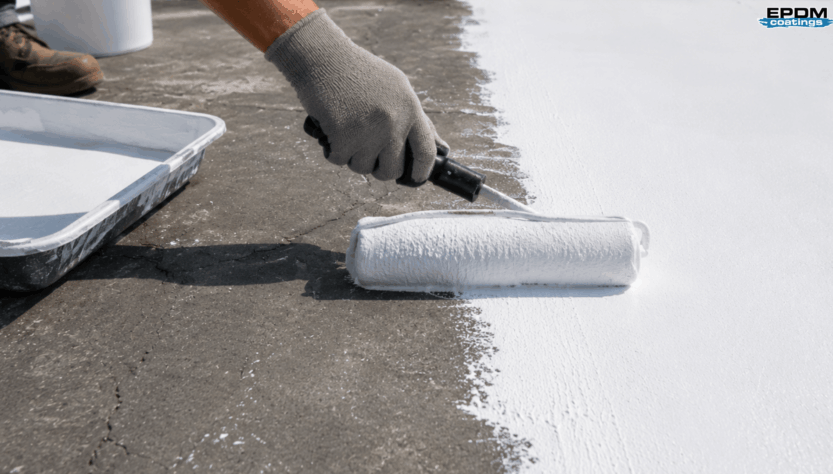
Liquid Butyl Rubber can be applied with simple tools on many projects. EPDM Coatings recommends mixing with an electric drill and paddle mixer, then applying with a 3/8-inch nap roller and a brush for corners or hard-to-reach areas.
For easier coverage, EPDM Coatings suggests chalking the roof into sections. One gallon should cover a 10 x 5-foot area; four gallons should cover about 200 square feet; and a five-gallon pail should cover about 250 square feet on smooth surfaces. This helps you stay close to the recommended spread rate.
For larger commercial roofs, spraying may be considered with proper equipment. But for many smaller projects, a roller-and-brush setup can make the process straightforward.
Simple Long-Term Maintenance
After the coating is applied, maintenance becomes easier. Roof Protect can also be used annually to remove dirt, grease, and buildup, helping extend the roof’s service life. Regular inspections are still smart, especially after storms, strong winds, or falling debris.
A coated roof should not be ignored, but it also should not need constant patching when the surface is properly prepared and coated. Keep the roof clean, address damage quickly, and avoid letting small issues sit for months.
Final Thoughts
Liquid rubber roof coatings are popular because they solve real roofing problems practically. They create a seamless waterproof membrane, help protect against ponding water, resist weather exposure, and reduce the need for complicated multi-coat systems.
EPDM Coatings’ liquid butyl rubber stands out as a one-coat, no-primer system designed for long-term roof protection. With proper cleaning, seam repair, dry surface preparation, and the correct application rate, it can help restore an aging roof and protect it for years to come.
A roof does not need to be leaking badly before you act. If you see cracks, chalking, separated seams, or ponding water, it may be time to protect the surface before the damage spreads. Liquid rubber roof coating gives you a durable, waterproof, and easy-to-maintain way to do exactly that.