
Walk across a black EPDM roof on a sunny afternoon, and one thing becomes obvious very quickly: it gets hot. Really hot.
That heat does not always stay on the outside of the building. Some of it moves through the roofing system and raises the indoor temperature. The air-conditioning system must work longer, upper rooms may remain uncomfortable, and the building can continue holding heat even after the sun starts going down.
For many property owners, the first thought is roof replacement. But a complete tear-off may not be necessary when the existing EPDM membrane is still attached, stable, and repairable. In that situation, applying a white roof coating can be a more practical way to restore the roof while also reducing how much solar heat it absorbs.
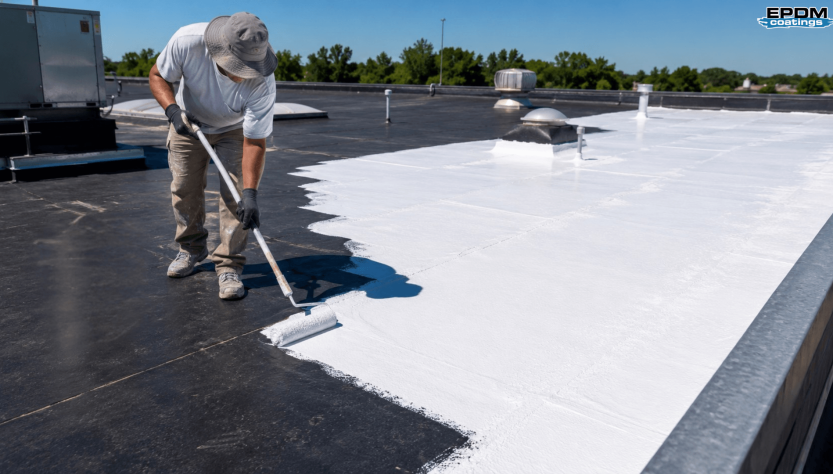
White Liquid Butyl Rubber from EPDM Coatings is designed for this purpose. Apply it over a properly prepared roof, and it cures into a flexible, seamless membrane. Instead of simply changing the roof from black to white, the coating also protects it from water, UV exposure, ozone, mildew, and regular expansion and contraction.
Why Change a Black EPDM Roof to White?
Black surfaces absorb a large amount of sunlight. During warmer months, that can push roof temperatures far above the outdoor air temperature.
A white roof reflects more sunlight and absorbs less heat. It sounds simple because it is. Less heat on the roof generally means less heat trying to move into the building below.
That does not mean every property will suddenly have the same energy bill after coating the roof. Cooling costs depend on many things, including insulation, local weather, building size, indoor temperature settings, and the condition of the HVAC system.
Still, lowering the surface temperature of a large, dark roof can reduce some of the strain placed on the cooling system. This is especially useful for flat and low-slope commercial buildings that receive direct sunlight for most of the day.
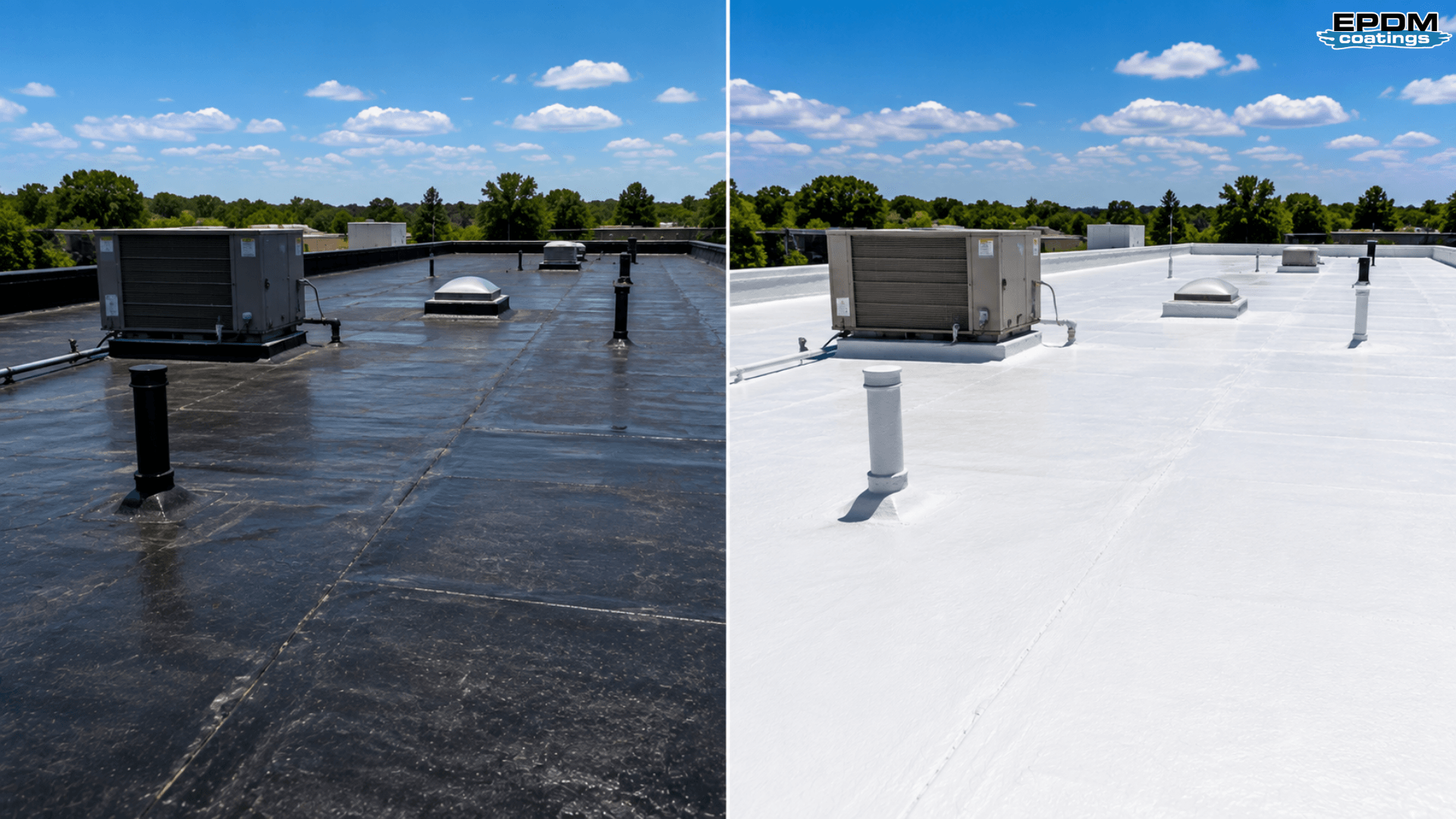
EPDM Coatings has shared an example involving a 15,000-square-foot black EPDM roof. Before coating, the surface measured 156°F with an infrared thermometer. After applying White Liquid Butyl Rubber, the temperature dropped to 78°F.
That was a significant difference for that particular roof. Results will naturally vary from one property to another, but this example shows why white coatings matter for more than appearance.
A White Finish Is Only Part of the Job
It is easy to focus on reflectivity, but a roof still has one primary responsibility: keeping water out. A white coating that looks good but cannot tolerate standing water, temperature changes, or roof movement will not provide much long-term value. That is why the material matters.
Liquid Butyl Rubber is not ordinary white roof paint. It is a solvent-based coating that chemically cross-links as it cures. Once applied, it forms a continuous membrane over the prepared surface.
The material also self-levels. Roller marks begin to settle as the coating cures, leaving a more uniform finish across the roof.
Flexibility is another important point. EPDM roofs expand when they become warm and contract when temperatures fall. A rigid repair product may eventually crack or separate as the roof moves. Liquid Butyl Rubber is designed to remain flexible, with published technical data listing 500% elongation and tensile strength of 1,520 PSI.
It is also intended to withstand ponding water. That matters because many flat roofs hold shallow areas of water after heavy rain. A dependable roof sealant must stay bonded even when those wet conditions happen repeatedly.
Should Every Old EPDM Roof Be Coated?
Not necessarily. A coating can restore and protect an aging roof, but it cannot fix every underlying problem. Before deciding on a coating project, inspect the membrane carefully.
Look for open seams, cuts, holes, loose sections, soft areas, trapped moisture, and places where the membrane has separated from the roof deck. Pay attention to roof edges, drains, flashing, pipes, vents, and older patches.
Loose roofing must be secured. Damaged sections need to be repaired. Areas with trapped moisture may require more investigation before coating begins.
Think of the coating as the final protective layer, not a substitute for the repair work underneath it.
EPDM Coatings states that Liquid Butyl Rubber can add approximately 18 to 20 years to the service life of a suitable single-ply EPDM roof. However, that performance depends heavily on the roof’s condition and the quality of the preparation.
Reinforce openings larger than 1/16 inch before applying the full coating. You can use compatible butyl repair materials or the Seam Tight system for problem seams and damaged areas.
Taking care of this roof repair work first gives the finished membrane a sound surface to bond to.
Cleaning Is Not a Minor Step
Many coating failures begin before the roller ever touches the roof. Dust, oil, grease, wax, mildew, loose material, and trapped moisture can all interfere with adhesion. Even a roof that looks fairly clean from the ground may have a layer of chalky residue or surface contamination.
Start by removing loose debris. Then inspect and clean the entire area, including low spots and sections around penetrations.
EPDM Coatings recommends Roof Protect Cleaner for removing dirt, grease, oil, mildew, mould spores, and other contaminants.
After cleaning, allow the roof to dry fully. Do not assume it is ready simply because the main surface looks dry. Water may remain near seams, under loose edges, around drains, or inside low areas. Do not apply Liquid Butyl Rubber over a damp roof.
For older EPDM membranes, you may apply a light field coat before the regular application. This field coat uses the same Liquid Butyl Rubber material and helps promote adhesion. A separate primer is not normally required.
Calculate the Material Before Starting
Liquid Butyl Rubber is designed to cure at a 20-mil dry film thickness. On a smooth surface, one gallon covers approximately 50 square feet. A five-gallon pail covers about 250 square feet. Rough or irregular roofs may require additional material.
Trying to stretch one gallon across a larger area may save material at the start, but it can leave the finished membrane too thin. Apply the coating at the recommended rate to achieve the intended protection.
One simple way to control coverage is to divide the roof into measured sections. A five-foot-by-ten-foot area equals 50 square feet, which is the recommended coverage for one gallon. For five gallons, a ten-foot-by-twenty-five-foot section provides the same calculation. Marking these areas before application makes it easier to see whether the coating is being spread too far.
Applying White Liquid Butyl Rubber
Mix the material thoroughly with an electric drill and paddle mixer. Proper mixing is important because the coating must have an even consistency before application.
For most smaller projects, use a 3/8-inch nap roller. Use a brush around edges, corners, pipes, flashing, and other areas the roller can’t reach. You can pour the product directly onto a flat roof and then spread it evenly across the measured section.
Liquid Butyl Rubber is intended as a true one-coat application. A separate primer and multiple finish coats are not normally required when the roof is prepared as directed.
Weather conditions still matter. Choose a day when the temperature will stay above 50°F for at least three hours. In suitable conditions, the coating can become waterproof in roughly two to four hours and may cure fully in approximately eight to ten hours. If the temperature drops below 50°F, the curing process pauses and resumes when warmer conditions return.
It is also a good idea to keep unnecessary foot traffic off the roof while it cures. EPDM Coatings recommends waiting approximately 48 hours before walking on the completed surface. Always review the official application instructions before beginning.
Is a White EPDM Roof Coating Worth It?
For a stable black EPDM roof, White Liquid Butyl Rubber offers two benefits in one project. First, it creates a seamless waterproof membrane that remains flexible and resists UV exposure, ozone, mildew, temperature changes, and ponding water. Second, the white surface reflects more sunlight and can reduce the heat the roof absorbs.
The one-coat process may also reduce labor compared with systems that require separate primers and multiple layers.
None of that removes the need for careful preparation. Inspect, repair, clean, measure, and dry the roof before you begin coating.
When you handle those steps properly, a white roof coating can do much more than brighten an older membrane. It can help restore the roof, protect the building from leaks, lower roof surface temperatures, and extend the useful life of the existing EPDM system.