

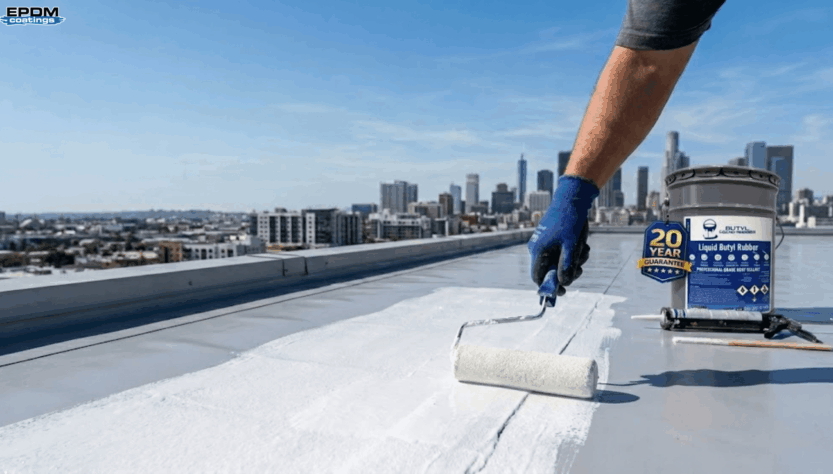
Flat roofs are simple until they’re not. At first, everything looks fine. Then one day you notice a stain, maybe a small damp spot, and you think, “It’s probably nothing.” But with flat roofs, small issues rarely stay small. Water doesn’t rush off as it does on sloped roofs – it sits, waits, and eventually finds a way in. And once it does, it doesn’t stop at the surface.
The good part? You usually don’t need to replace the whole roof. Most leaks – especially around seams – can be handled if you catch them early and use the right coating system.
Why Flat Roofs Commonly Develop Leaks
Flat roofs take more stress than people expect. Water tends to collect rather than drain quickly. Over time, that standing water slowly wears down the surface, especially in areas where the roof isn’t perfectly even. But the real weak spots? Seams.
Anywhere two sections meet, there’s a higher chance of separation over time. Heat expands materials, cold contracts them, and that constant movement eventually creates gaps.
That’s where something like an epdm coating becomes useful – it helps create a continuous layer instead of relying on multiple joints holding up forever.
Signs Your Flat Roof Has a Leak
Not every leak is obvious. In fact, most start quietly.
You might notice:
- A faint stain on the ceiling that wasn’t there before
- Slight bubbling on the roof surface
- A soft area when you walk across it
- A smell indoors that feels… off, kind of damp.
- Cracks or seams that don’t look as tight as they used to
None of these screams “major problem” on its own, which is why people ignore them. But together, they usually point to the same thing – water getting in where it shouldn’t.
Why Seams Are the Weakest Point
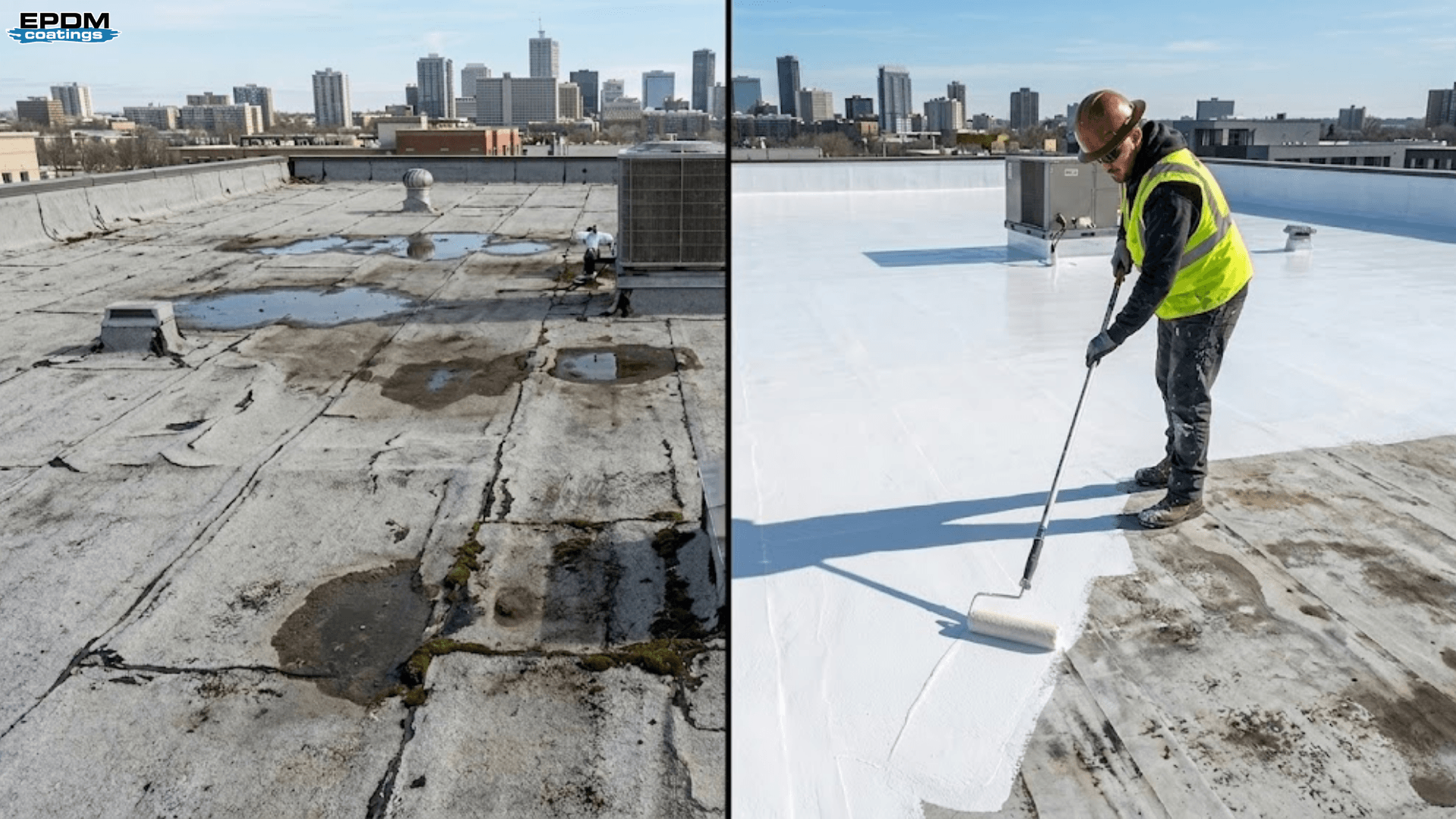
Seams are just more vulnerable. That’s really what it comes down to. Even when installed properly, they’re still points of connection. And over time, those connections are affected by movement, pressure, and weather. Eventually, they start to give a little. That tiny shift is all water needs.
Using something flexible like liquid butyl rubber helps because it doesn’t just sit on top – it moves with the surface. Instead of cracking when the roof shifts, it stays intact.
Step – by – Step: How to Repair Flat Roof Leaks
You don’t need a complicated process here. What matters is doing each step properly, without rushing through it.
Step 1: Locate the Source of the Leak
This part can take some patience. The visible damage inside isn’t always directly below the leak. Check seams first, then edges, vents, and any spots that look slightly off.
Step 2: Clean the Surface
It sounds basic, but it matters more than people think. If the surface isn’t clean, nothing you apply will stick the way it should. Dust, dirt, even a bit of moisture – it all affects the result.
Step 3: Seal Seams and Cracks
Now you’re getting to the important part. Apply Liquid BYUTL Rubber over seams, joints, and any visible cracks. Don’t just skim over it – make sure it actually fills and covers the area properly. This step is where most repairs either success or fail later.
Step 4: Apply a Protective Roof Coating
Once the weak points are sealed, apply a full roof coating to the surface. This isn’t just for looks – it creates a continuous barrier so water doesn’t get another chance to sneak in somewhere else.
Step 5: Let It Cure and Inspect
After everything’s applied, give it time to take effect. Don’t rush to test it right away. Once it’s set, take a quick look over the surface. You’re just making sure coverage looks even, and nothing was missed.
Why Liquid Butyl Rubber Works So Well
Some coatings look good at first, then start to peel or crack a few months later. That’s usually because they can’t handle movement or changes in weather. A good EPDM coating, paired with Liquid butyl Rubber, behaves differently. It stays flexible.
That flexibility is what keeps seams sealed even when the roof expands and contracts. It’s not about being rigid – it’s about adapting without breaking down.
Long – Term Benefits of Using Liquid Butyl Rubber
When you handle leaks properly the first time, everything else gets easier. You’re not constantly patching the same spots or worrying every time it rains.
Over time, that means:
- Fewer repairs to deal with
- Lower overall costs
- A roof that holds up better in different weather
- Less stress about “what if it leaks again.”
It’s not just about fixing – it’s about not repeating the same problem.
Final Thoughts
Flat roof leaks can be frustrating, mostly because they don’t always show up clearly at the start. But once you understand where they come from – mainly seams – it becomes a lot easier to deal with them.
Using an epdm coating, sealing problem areas with liquid butyl rubber, and finishing with a solid roof coating is a straightforward way to handle it. No complicated system, no guesswork. Just clean it, seal it properly, coat it, and keep an eye on it from time to time. That’s really it.