
Discovering a leak in your EPDM roof can feel like a punch to the gut. For most property owners, the immediate fear is the massive bill and the chaotic mess of a total roof replacement. But at epdm coatings, we’ve spent over 25 years helping people realize that a few failing seams don’t mean your roof belongs in a landfill.
Using high-quality liquid butyl rubber can actually “reset the clock” on your existing structure. It’s about working smarter, not harder – sealing those stubborn leaks and adding up to 20 years of life to your roof without the headache of a tear-off. Here is how to tackle those repairs and why specialized EPDM roof coatings are your best line of defense.
Why EPDM Seams Fail and How to Spot the Damage
EPDM is legendary for its durability, but even the toughest materials have an Achilles’ heel: the seams. Since these roofs are essentially giant rubber jigsaw puzzles, the glue holding the pieces together is the most vulnerable part of the system. Years of baking in the sun and expanding or contracting with the seasons eventually cause that adhesive to dry out and give up.
Common Signs Your Seams Need Attention
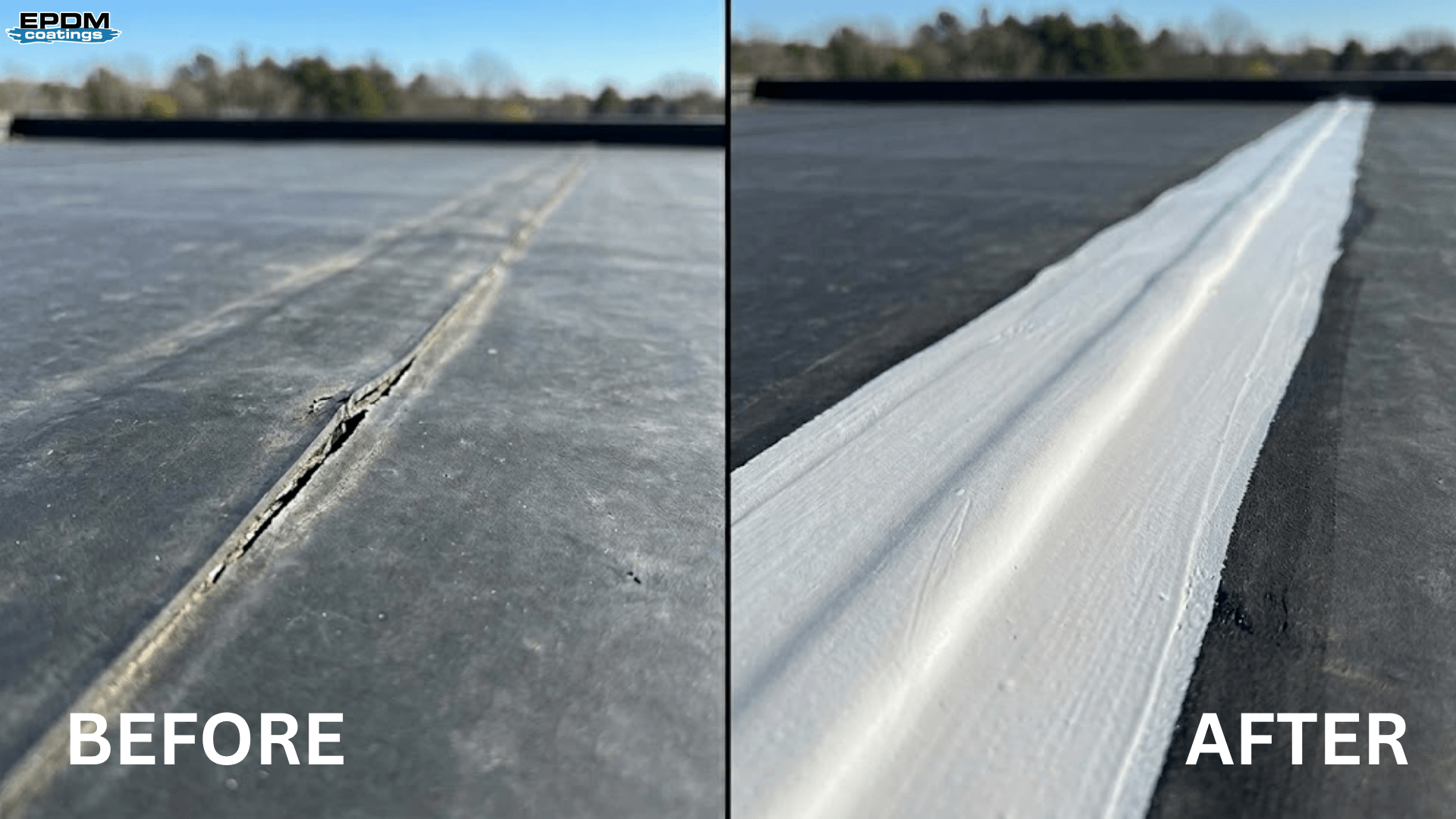
- The “Fish-Mouth” Gap: If you see the edge of a seam curling up like a dry leaf, water isn’t just sitting there – it’s actively diving under your membrane.
- Chalking and Dust: Run your hand across the rubber. If it comes away covered in black or grey residue, your roof is oxidizing. It’s losing its flexibility and needs a protective layer.
- Bubbles and Blisters: Trapped air or moisture near a seam is a ticking time bomb for a major leak.
Liquid Butyl Rubber Vs. Traditional Sealants
When a leak pops up, the temptation is to grab a cheap bucket of silicone or acrylic caulk from the local hardware store. Resist that urge. Those products are temporary “stick-on” fixes that often peel off within a season because they don’t actually bond with the EPDM.
liquid butyl rubber is a different animal entirely. It doesn’t just sit on top of the roof; it undergoes a chemical cross-linking process that fuses it to the original membrane.
Why It Beats the Competition:
- It Loves Ponding Water: Most water-based roof coatings will actually turn back into liquid if they sit under a puddle for too long. Our liquid rubber was built for it.
- Unbeatable Temperature Range: Whether it’s a -40°F deep freeze or a 300°F heatwave, this material stays flexible. It won’t crack when the building shifts.
- One and Done: While other systems demand primers and multiple layers, this is a true one-coat application that saves you days of labor.
How to Seal Seams Like a Specialist
You don’t need a 10-man crew to fix your roof. If you can handle a pressure washer and a paint roller, you can do this. Here is the workflow we recommend for the best results.
1. The Deep Clean
You wouldn’t put a Band-Aid on a muddy knee, right? The same logic applies here. Pressure wash the roof until the water runs clear. If there’s old silicone or “roofing tar” from a previous patch job, it has to go. Liquid rubber is powerful, but it won’t bond to oily gunk or old silicone.
2. Reinforce the Weak Spots
If a seam has completely pulled apart, use a reinforcing fabric. Lay down a layer of liquid butyl rubber, embed a polyester mesh into it, and then coat it. This creates a “bridge” that can stretch up to 500% without snapping.
3. The Power Mix
Our product is a two-part system. You’ll find a small bottle of catalyst that needs to be mixed into the main pail. Don’t just stir it with a stick – get a power drill and a paddle mixer. Spend five minutes making sure that the catalyst is perfectly blended so the rubber cures evenly across your entire roof.
4. The Application
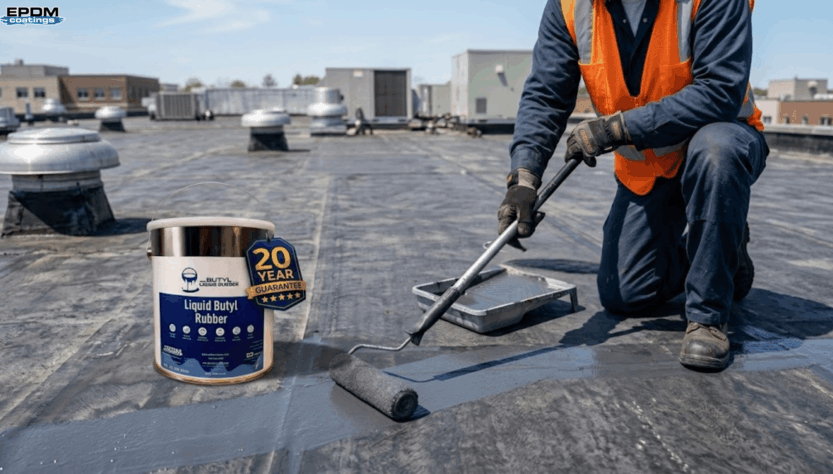
Pour the mixed rubber in a “snake” pattern along the roof. Use a squeegee to spread it out and follow up with a 3/8-inch nap roller to smooth everything over. It’s self-leveling, so it will naturally smooth out those minor imperfections as it dries into a single, seamless sheet.
Why Repairing is Better Than Replacing
We live in a “throwaway” culture, but your roof shouldn’t be part of it. Choosing epdm roof coatings over a full replacement is a win for your wallet and the planet.
- Massive Savings: You can usually restore a roof for about half the cost of a replacement.
- Energy Efficiency: A white liquid rubber coating reflects sunlight, keeping your building significantly cooler and slashing your AC bills.
- Zero Waste: You aren’t paying to haul tons of old rubber to a landfill.
- No “Open Roof” Risk: A total replacement leaves your building exposed to the elements for days. Recoating keeps your building sealed at all times.
Final Thoughts: Don’t Wait for the Next Storm
A leaking seam is a warning sign. Every time it rains, moisture gets trapped underneath your membrane, which can lead to mold, saturated insulation, and eventual structural damage. By choosing to apply a high-quality liquid butyl rubber coating today, you are making a proactive investment that protects your property for decades.
At EPDM Coatings, we provide the expertise and the industrial-grade materials you need to get the job done right the first time. Whether you are a DIY homeowner or a commercial property manager, our roof coatings offer a permanent solution to the “seam headache.”
Ready to fix your roof for good? Visit our epdm Coatings to calculate how much material you need for your project and start your journey toward a leak-free future.