
A flat roof takes a beating during the summer. Day after day, the surface is exposed to direct sunlight as temperatures continue to rise. Over time, that constant exposure can dry out roofing materials, weaken older seams, and make the building below harder to cool. Add rain, standing water, and seasonal temperature changes, and even a roof that once performed well may begin showing its age. That does not always mean the entire roof needs to be torn off and replaced.
When the existing roof is still structurally sound, applying the right roof coating may help restore the surface, seal vulnerable areas, and reduce the amount of solar heat absorbed by the roof. For EPDM and other approved roofing materials, White Liquid Butyl Rubber from EPDM Coatings provides waterproofing and UV protection in a single seamless membrane.
What UV Exposure Does to an EPDM Roof
Sunlight affects more than the colour of a roof. Years of ultraviolet exposure can gradually age the surface and place additional stress on seams, flashing, penetrations, and previously repaired sections. The roof also expands during hot weather and contracts again when temperatures fall. If the repair material cannot move with it, cracks and separation may eventually appear.
This is one reason flexibility matters when choosing a roof sealant. Liquid Butyl Rubber is designed to remain flexible after curing. According to the technical information provided by EPDM Coatings, the material offers approximately 500% elongation and tensile strength of around 1,520 PSI. In practical terms, the finished membrane can stretch as the roof moves instead of becoming hard and brittle like many temporary patching materials.
The coating is also formulated to resist ultraviolet light, ozone, water, and general exterior ageing. Once cured, it creates a continuous surface over the prepared roof rather than leaving multiple exposed seams between separate roofing materials.
Why a White Roof Coating Can Reduce Heat
Walk across a dark roof on a sunny afternoon, and the heat is immediately noticeable. Dark surfaces absorb a large amount of solar energy, which can raise the temperature of both the roof and the building underneath it.
A reflective white surface behaves differently. White Liquid Butyl Rubber is designed to reflect more sunlight and reduce heat absorption. EPDM Coatings states that the white formulation retains its reflectivity over time, rather than quickly losing its reflective benefit after installation. A cooler roof may help reduce the amount of heat entering the building. That can reduce the demand on air-conditioning equipment during hot weather, particularly in large commercial buildings with wide, exposed roof areas.
The exact energy savings will naturally vary. Building design, insulation, climate, indoor temperature settings, and cooling equipment all affect the final result. Still, reducing the surface temperature of a dark roof can make a meaningful difference.
A 15,000-Square-Foot Roof Example
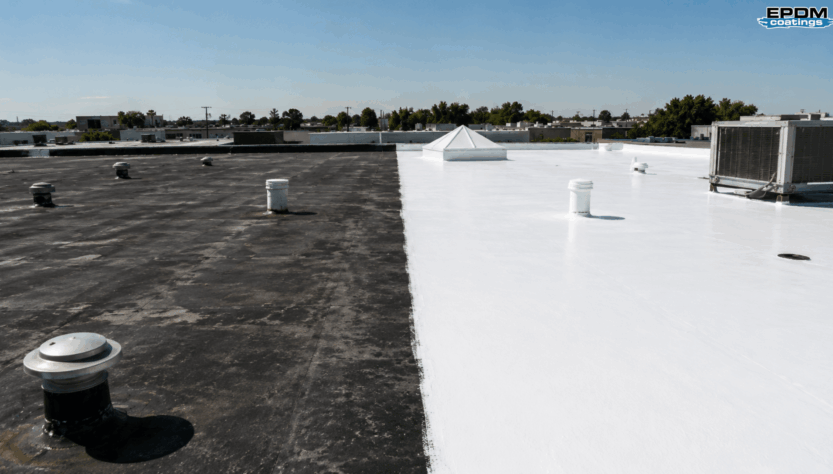
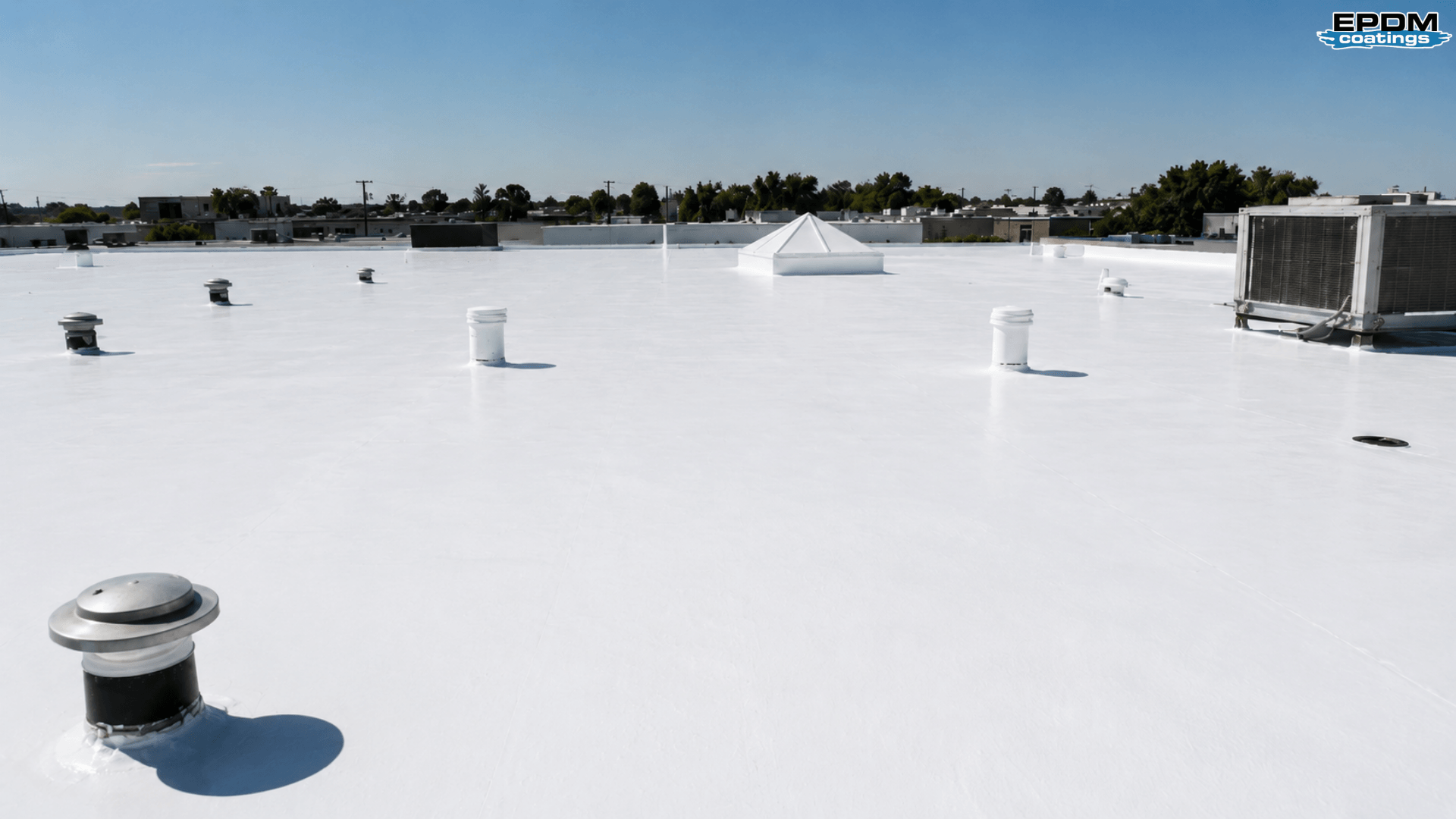
EPDM Coatings has documented a project involving a 15,000-square-foot black EPDM roof. Before the white coating was applied, the customer measured the roof surface at 156°F using an infrared thermometer. After the application of White Liquid Butyl Rubber, the recorded surface temperature was 78°F. That is a substantial reduction.
The project required 52 five-gallon pails. Before coating began, the roof was cleaned, and important seams were reinforced. The installation team then applied the material in planned sections using rollers.
The customer had also compared the system with two competing coating options. Those alternatives required additional primers and topcoats. Because Liquid Butyl Rubber was applied as a one-coat system without a separate primer, the customer estimated a saving of approximately $26,000 in labour and material expenses.
Not every roof will produce the same temperature change or cost saving. However, the example demonstrates what a reflective white membrane can do when applied correctly over a large, heat-absorbing roof.
It Does More Than Reflect Sunlight
Reflectivity is important, but a roof coating still has to keep water out. liquid butyl rubber cures into a seamless waterproof membrane across the prepared surface. The product chemically cross-links while curing, creating a bonded coating rather than simply sitting on the roof like ordinary paint. That distinction matters on flat and low-slope roofs.
These roofs often have areas where rainwater drains slowly or remains on the surface after a storm. Some coatings are not designed for continuous ponding water and may soften, blister, or lose adhesion over time.
Liquid Butyl Rubber is designed to withstand year-round ponding water. For property owners dealing with recurring leaks or repeat roof repairs, that resistance can be especially valuable.
Instead of repeatedly patching individual areas, the coating creates one continuous layer over the roof. Seams, edges, penetrations, and known problem areas still need proper preparation, but the final result has fewer exposed points where water can enter.
One Coat Can Simplify the Project
Roof restoration costs are not limited to the coating itself. Primers, multiple finish coats, additional labour, equipment time, and project delays can all increase the total expense. A product that looks inexpensive by the gallon may cost considerably more once the full installation process is included.
Liquid Butyl Rubber is a one coat product that never requires a primer and can go over all roof types with the exception of silicone or PVC; making it a very versatile solution The coating is applied at the recommended thickness of 20 mils. One gallon covers approximately 50 square feet on a smooth surface, while one five-gallon pail covers around 250 square feet.
These coverage figures should be treated as application requirements, not targets to stretch beyond. Applying the product too thinly may leave the roof without the intended membrane thickness. Rough or uneven surfaces may also require more material than smooth roofing substrates. Measuring the roof carefully before ordering can prevent interruptions once the application has started.
What Roofing Surfaces Can Be Coated?
Liquid Butyl Rubber can be used on several approved roofing materials, including:
- EPDM rubber
- TPO
- Metal
- Concrete
- Fibreglass
- Hypalon
- Built-up roofing
- Foam
Also it’s not just about the coating!
The surface must be clean, dry, and stable. Dirt, oil, wax, loose material, moisture, heavy rust, and failing caulk can prevent proper adhesion. Damaged roofing sections should be repaired before the full coating is applied. Preparation is usually the least exciting part of a roof project, but it is also one of the most important. Even a high-quality coating will struggle to bond if it is rolled over dust, grease, trapped moisture, or loose roofing material.
Application and Weather Conditions
For roofs smaller than approximately 5,000 square feet, EPDM Coatings generally recommends applying the product with roller. Larger commercial roofs may be completed using an airless sprayer or a spreader.
Since this is a solvent based coating be sure to mix thoroughly into the coating before application. Once mixed, installers should follow the manufacturer’s instructions and work within the available application time. Weather conditions also affect curing.
EPDM Coatings recommends temperatures above 50°F for at least three hours after application. Under suitable conditions, the material can become waterproof in roughly two to four hours and may fully cure in approximately eight to ten hours. When temperatures drop below 50°F, the curing process pauses. It resumes once warmer conditions return. For that reason, it is worth checking the weather carefully rather than rushing to apply the coating before a cold night or an approaching storm.
Is White Liquid Butyl Rubber Right for Your Roof?
white liquid butyl rubber is worth considering when an existing roof needs more than another small patch but does not yet require complete replacement.
Its reflective white finish can help reduce heat absorption, while its flexible and seamless membrane protects the roof from UV exposure, rain, temperature movement, and ponding water. The one-coat application may also reduce labour and eliminate the need for a separate primer on most approved substrates.
The condition of the existing roof still matters. A coating cannot correct structural damage or replace roofing materials that are no longer secure. However, when the roof is suitable for restoration, the system can provide a practical way to extend its useful life.
The best results begin with an honest inspection, careful cleaning, correct material calculations, and close attention to the application instructions.
A roof coating should not simply make an old roof look newer. It should solve the problems that caused concern in the first place. For buildings dealing with intense sunlight, rising roof temperatures, ageing seams, or recurring leaks, White Liquid Butyl Rubber offers a way to address those issues with one continuous protective surface.