
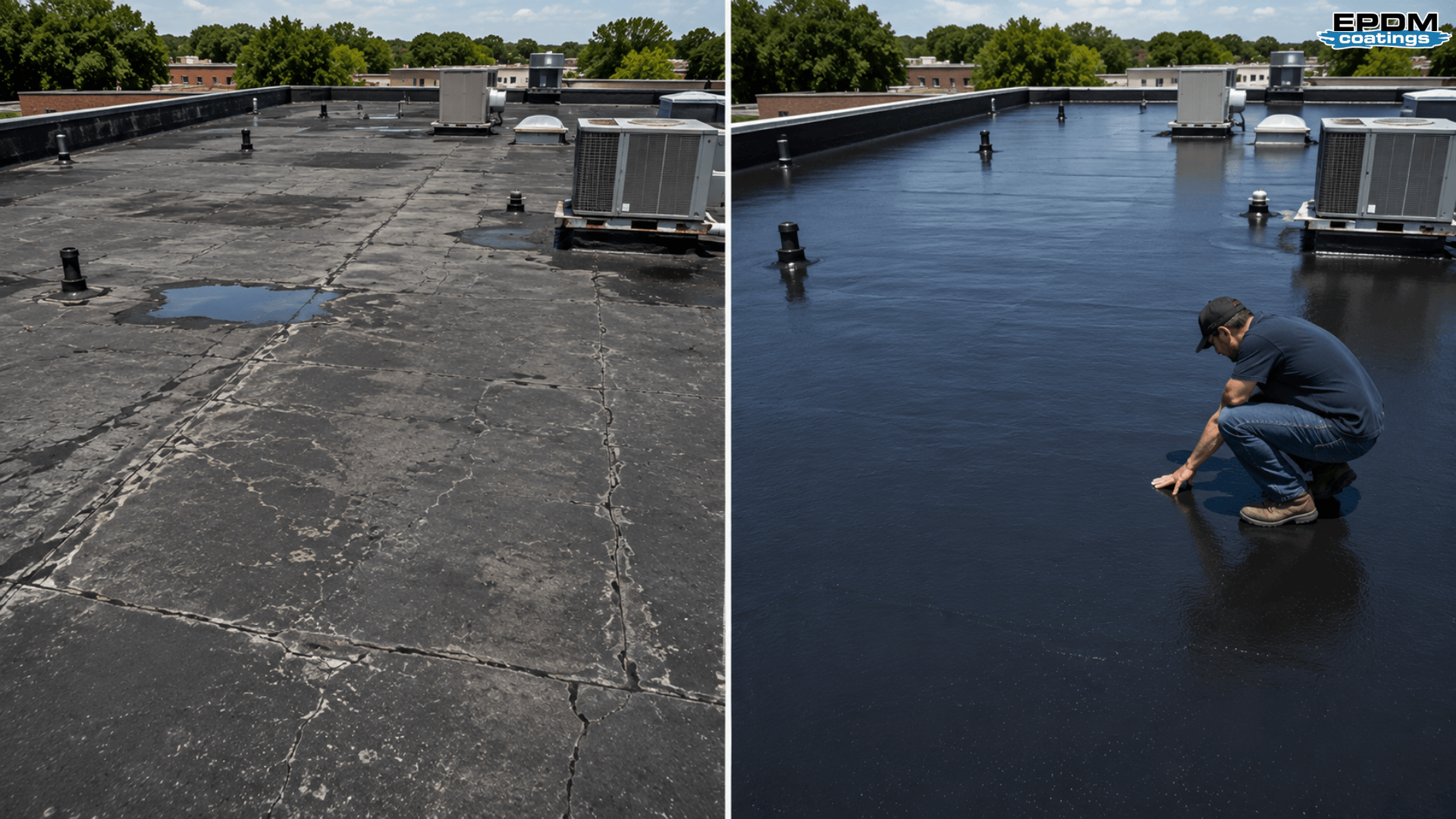
An EPDM roof may look perfectly normal from the parking lot, even when trouble is beginning to develop around the seams, flashing, drains, or rooftop equipment. That is often how flat-roof leaks start. The main rubber membrane may still be in usable condition, but a small joint begins to open. An older patch becomes brittle. Water collects in a low spot after a storm. Eventually, moisture finds its way beneath the roofing system.
Strong sunlight and high roof temperatures can make the problem worse. During the day, the roof heats up and expands. As temperatures drop, it contracts again. This repeated movement places stress on old repairs and weak areas.
The solution is not always a complete roof replacement. In many cases, a carefully planned roof repair can restore the damaged areas and add another protective layer over the existing surface. The first step is choosing the right product for the roof’s actual condition.
Inspect the Roof Before Buying a Product
When a leak appears inside a building, it is tempting to coat the area directly above the water stain. Unfortunately, the damaged section may be several feet away. Water can travel underneath the membrane or along the roof deck before it becomes visible indoors. That is why the entire roof should be inspected rather than focusing on one interior stain.
Check the seams, drains, pipes, vents, skylights, HVAC curbs, roof edges, flashing, and previous patches. Look for cracked caulk, lifting material, loose repairs, punctures, blisters, and sections where an existing coating has started to peel.
Ponding areas also deserve attention. Water that remains on the roof after rain can expose weak seams or older repair materials that are not designed for standing water. Once you understand where the roof is failing, it becomes easier to decide whether you need caulk, seam reinforcement, or a full roof coating.
Roof Sealant and Roof Coating Are Not the Same
These terms are sometimes used as though they mean the same thing, but each product has a different job. A compatible roof sealant is generally used for a specific opening. It may be applied around a pipe, vent, flashing detail, or narrow joint where water could enter.
A roof coating is applied across a much larger section of the roof. Once it cures, it forms a continuous membrane over the prepared surface. A roof with one small joint separation may only need cleaning and compatible caulk. Coating the entire roof may not be necessary.
However, when several seams are deteriorating, previous patches are beginning to fail, or the overall surface shows years of weather exposure, a complete coating may provide a more practical solution. The key is to complete the detailed repairs first. A coating should protect the finished work, not hide problems that are still moving, loose, or structurally unstable.
Reinforce Tears and Damaged Seams
A large tear or open seam needs more support than a small bead of caulk. EPDM Coatings recommends repairing holes, gaps, tears, and seams larger than 1/16 inch before applying Liquid Butyl Rubber. These areas may require SeamTight and reinforcing poly fabric.
SeamTight is applied across the damaged section, typically extending beyond the tear so the surrounding roof supports the repair. Poly fabric is then embedded into the wet material. The fabric follows the shape of the seam and reinforces the weak area. After the repair has dried, Liquid Butyl Rubber can be applied over it. This creates a layered repair. The fabric supports the damaged seam, while the coating covers and protects the repaired section.
Do not use a coating to hide loose membrane or damaged roof decking. If the surface moves underfoot, feels soft, or has lost structural support, address that problem before applying any liquid roofing product.
Why Flexibility Matters in Extreme Heat
An EPDM roof naturally moves as temperatures change. The roof may become extremely warm during sunny weather and then cool after sunset. This daily cycle causes expansion and contraction across the membrane, seams, and flashing details. A hard, brittle repair may eventually crack under that movement.
Liquid Butyl Rubber is designed to remain flexible after curing. EPDM Coatings lists the product with 500% elongation and tensile strength greater than 1,520 psi. That flexibility allows the cured material to move with the roofing surface instead of acting like a rigid layer of paint.
The product is also designed to resist UV light and ozone. Its listed temperature range extends from -40°F to 250°F, making it suitable for roofing systems exposed to major temperature changes. For U.S. property owners dealing with intense summer sun or large seasonal temperature swings, flexibility is one of the most important qualities to look for in a roof repair product.
Choosing Between White and Black Coating
Liquid Butyl Rubber is available in white and black. For roofs exposed to strong sunlight and high temperatures, white is generally the more practical option. A white roof surface reflects more sunlight and heat, while a black surface absorbs more heat. This makes white a useful choice when reducing heat absorption is one of the project goals.
Color does not replace proper preparation. A white coating cannot repair loose flashing, unstable seams, or damaged roof decking. Those issues still need to be corrected first. Once the roof is clean, dry, and properly repaired, the white coating can provide a seamless protective surface while reflecting more of the sun’s energy.
Preparation Has a Major Effect on the Result
Applying the coating may only take part of the project. Cleaning and repairing the roof usually requires more time. The surface must be clean, dry, and free from loose material. Remove leaves, dust, grit, unstable coating, old repair debris, and anything else that could become trapped under the new membrane.
EPDM Coatings recommends Roof Protect Cleaner for removing dirt, oil, grease, mildew, and mold spores from the roof surface. After cleaning, allow the membrane to dry completely. Liquid Butyl Rubber should not be applied over a damp roof.
Complete all caulking, seam work, and fabric reinforcement before opening and mixing the main coating. Once application begins, you should be able to work across the roof without stopping to repair areas that were missed during inspection.
Careful preparation is not simply an extra step. It gives the coating a better surface to bond to and helps prevent dirt, moisture, or loose material from being trapped underneath.
Apply the Coating at the Recommended Thickness
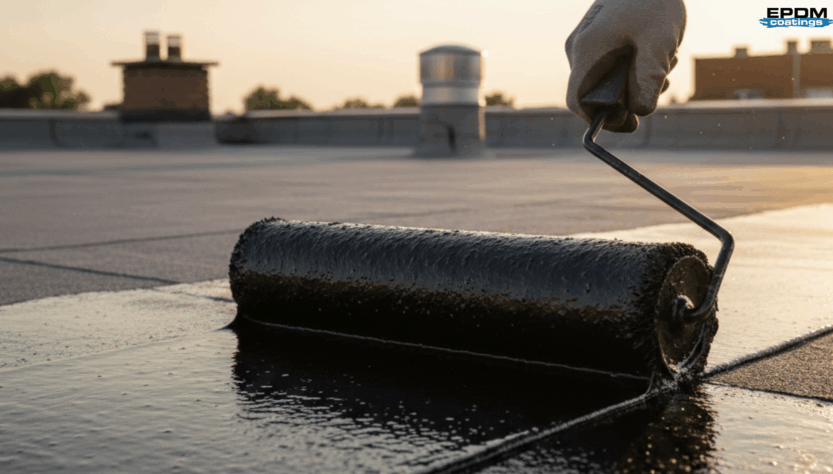
Liquid Butyl Rubber is designed as a one-coat system on approved and properly prepared surfaces. EPDM Coatings recommends a 3/8-inch nap roller for the main roof area. A brush can be used around walls, penetrations, edges, corners, and other detailed sections.
Coverage is approximately 50 square feet per gallon on a smooth surface and approximately 40 square feet per gallon on a rough surface. A textured or weathered roof generally uses more product because the coating settles into the surface.
Divide the roof into measured sections before application. This makes it easier to confirm that each gallon is being used across the correct amount of roof area.
Do not spread the coating too thin in an attempt to make one container cover additional square footage. The recommended finished thickness is approximately 20 mils. Reducing that thickness may leave weak or uneven areas. Measure the roof carefully and include additional material for flashings, repaired seams, walls, edges, and penetrations.
Plan the Application Around the Weather
EPDM Coatings recommends applying Liquid Butyl Rubber when temperatures are between 50°F and 100°F. During hot weather, the actual roof surface may be warmer than the surrounding air. Starting earlier in the day may provide more comfortable working conditions and help keep the surface within the recommended range.
The coating begins to form a skin in approximately two to three hours. Depending on temperature and humidity, it may become tack-free within three to four hours. If temperatures fall below 50°F while the product is curing, the material is not damaged. The curing process pauses and resumes when temperatures rise again.
Even though the coating develops early water resistance, it is best to choose a dry weather window. Check the forecast before starting and avoid applying the product when rain is expected during the early curing period.
Match the Repair to the Condition of the Roof
Every EPDM roof is different. A narrow opening around a vent may only need compatible Butyl MS Caulk. A torn seam may require SeamTight and poly fabric. A roof with widespread weathering may benefit from a complete Liquid Butyl Rubber coating once all detailed repairs are complete. The order of the work matters: inspect the roof, clean it, repair open joints, reinforce damaged seams, and then apply the coating.
Extreme UV exposure and heat do not automatically mean the entire roofing system must be removed. When the EPDM membrane and roof structure are still sound, a properly applied roof sealant and coating system may help restore the existing roof and protect it from future exposure.
The coating is important, but it is only one part of the project. Compatible materials, careful preparation, correct coverage, and suitable application conditions are what turn a basic repair into a more dependable roofing solution.