
Multiple leaks on a flat roof can wear you down quickly. One week, you patch around a seam. The next rain comes, and now there is a new damp spot somewhere else. You go back up, check the drains, look around vents, inspect old patches, and still feel like the water is one step ahead of you.
That is the frustrating thing about flat roofs. A leak is not always sitting directly above the stain you see inside the house. Water can travel under the surface before it shows up. So by the time there are two or three leaks, many homeowners start thinking the only answer is a full roof replacement.
Sometimes replacement is the right call. If the roof is badly damaged, holding trapped moisture, or the structure underneath is failing, coating is not a magic fix. But if the roof surface is still usable and the main problems are seams, small tears, aging areas, cracks, or ponding water, there may be a more affordable way to handle it.
That is where a liquid roof coating can make sense. EPDM Coatings offers Liquid Butyl Rubber for residential and commercial flat roofs, providing homeowners with a practical option for roof repair without jumping straight to a full tear-off.
Why Flat Roofs Can Leak in Several Places
A flat roof has a tough job. Unlike a steep roof, it does not naturally shed water as quickly. After rain, water may sit in low areas, around seams, near drains, or beside roof penetrations. If those areas are already weak, water will keep testing them.
Over time, small issues add up. A seam may open slightly. A previous patch may loosen. A small tear may spread. Metal areas can rust. Old coating may wear thin. Once several of these problems appear together, it starts to feel like the roof is leaking everywhere.
This is why spot patching can become frustrating. You fix the suspicious area, but another weak area may still be open. A coating system helps because it lets you deal with the roof more broadly. Instead of chasing one leak after another, you clean the surface, reinforce the obvious weak spots, and coat the roof with a seamless protective layer.
Check the Roof Honestly First
Before applying any coating, take a real look at the roof. Do not just focus on the leak stains inside the house. Walk the roof safely and inspect the full surface.
Look for soft spots, trapped moisture, large damaged sections, loose material, open seams, tears, cracks, and failing old repairs. If the surface is not solid enough to coat, that needs to be addressed first.
Liquid Butyl Rubber from EPDM Coatings can be used on many roof surfaces, including rubber, metal, fiberglass, concrete, Hypalon, TPO, BUR, foam, and other approved surfaces. It can also be used on original EPDM rubber roofing systems, modified and BUR roofs, fiberglass, polyurethane foam, weathered vinyl, and concrete where there is little foot traffic.
If the roof is TPO, the site notes that it should be aged, cleaned with Roof Protect, dry, and still have service life remaining before coating. That kind of detail matters because even a strong coating needs the right surface underneath it.
Cleaning Is Not Just Prep Work
Cleaning the roof may not feel like the main part of the repair, but it is one of the most important parts.
A coating needs to bond to the roof, not to dirt on top of it. If the surface has grease, mildew, loose debris, chalking, oil, or moisture, the coating will not get the clean contact it needs.
EPDM Coatings recommends using Roof Protect for cleaning before applying Liquid Butyl Rubber. Roof Protect helps remove oil, grease, mildew, dirt, and living mold spores from the roof membrane.
After cleaning, the roof must dry completely. This is not a step to rush. Liquid Butyl Rubber should not be applied to a damp surface. If moisture is trapped underneath, the coating may not bond properly.
For homeowners trying to control costs, good prep is where money is saved. A rushed coating job can fail early. A clean, dry, repaired surface gives the material a better chance to do what it is made to do.
Fix the Bad Spots Before Coating
If your roof has multiple leaks, it probably has multiple weak points. Do not roll coating over them and hope for the best.
Walk the roof and mark seam rips, holes, tears, gaps, cracks, rusted areas, and problem joints. EPDM Coatings recommends repairing or reinforcing holes, gaps, seams, or tears larger than 1/16 inch before coating.
For seam rips, Steamtight can be applied about 8 inches wide with a roller or brush. Poly fabric can then be embedded into the wet Steamtight and allowed to dry. The next day, the area can be coated with Liquid Butyl Rubber, thereby encapsulating the repair.
For wider seam or joint gaps, EPDM Coatings also mentions butyl tape or polyester mesh fabric. The fabric can be saturated with the coating, allowed to dry, and then coated again until fully covered.
This is the difference between a quick patch and a more complete repair. A good epdm roof sealant approach does not ignore the damaged areas. It first reinforces them, then seals the roof surface.
Why Liquid Butyl Rubber Makes Sense for Flat Roof Leaks
Flat roofs need a coating that can handle more than sunshine. They need protection against standing water, roof movement, and weather exposure.
liquid butyl rubber is designed as a one-coat system. EPDM Coatings states that it does not require a second coat and covers about 50 square feet per gallon on a smooth surface. It is applied at a 20-mil film thickness.
That can make the project more manageable. Many coating systems involve primer, base coats, topcoats, and additional labor. Liquid Butyl Rubber is positioned as a no-primer, one-coat option for approved surfaces, helping reduce the time and work involved.
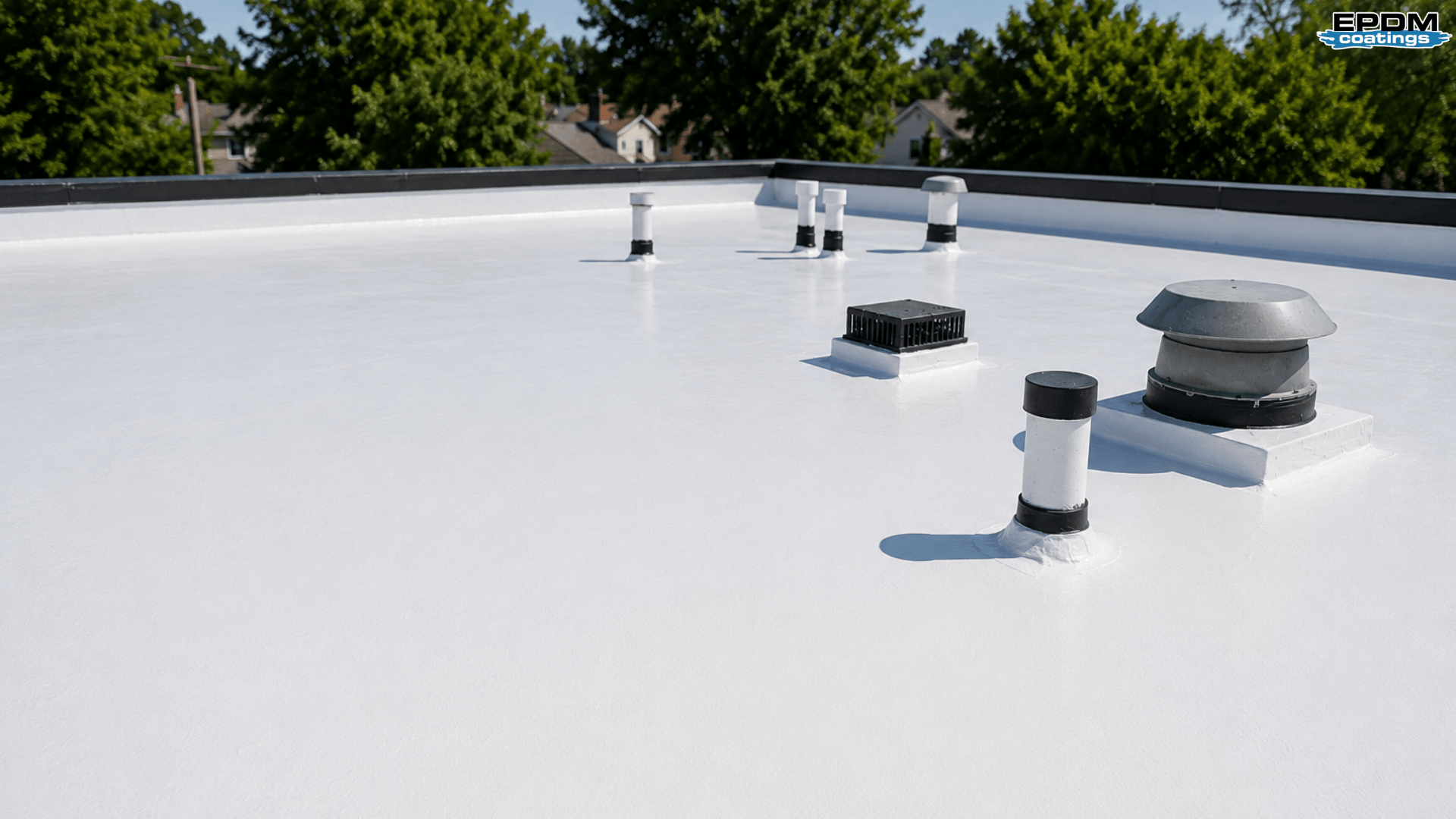
It is also solvent-based. EPDM Coatings explains that it chemically cross-links as it dries, helping the coating bond to the roof surface and form a seamless membrane. Once applied, it self-levels and dries into a smooth protective surface.
Ponding water resistance is a major concern for flat roofs. EPDM Coatings states that Liquid Butyl Rubber can withstand standing water 365 days a year. For a residential flat roof with low spots, that is an important reason to consider it.
Applying It Without Overthinking the Process
For many residential flat roof projects, the tools are simple: an electric drill, paddle mixer, 3/8-inch nap roller, chip brush, rubber spatula, rags, and cleanup solvent such as mineral spirits or Xylene.
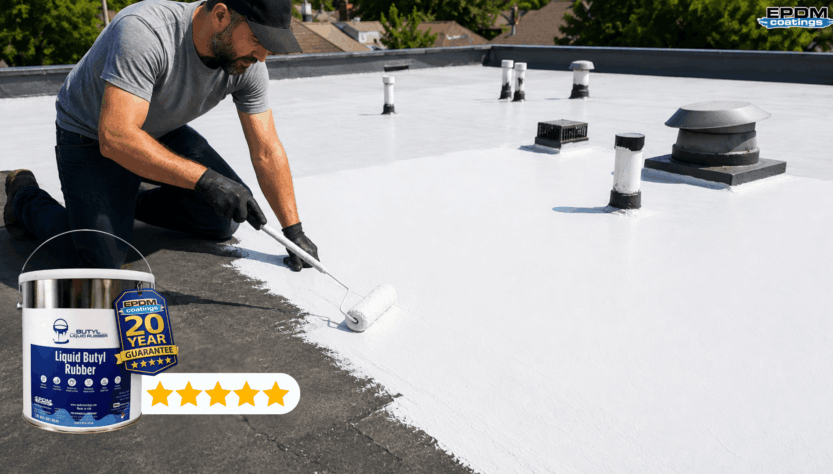
Mix the product well first. Then pour it onto the roof and spread it with a roller. Use a brush for corners, edges, and hard-to-reach areas.
Coverage matters. One gallon should cover about a 10-by-5-foot section on a smooth surface. Four gallons should cover about a 20 x 10-foot area, and five gallons should cover around a 25 x 10-foot area. Chalking the roof into sections helps keep the application even and prevents the coating from being stretched too thin.
This is especially useful for homeowners doing the work themselves. It gives you a simple way to know whether you are applying enough material.
Pick the Right Weather Window
The roof must be dry before coating. Rain should not be in the forecast if you can avoid it. EPDM Coatings notes that Liquid Butyl Rubber waterproofs in about 3 hours at temperatures of 50 degrees or above, but starting with a dry surface and dry conditions is still the better plan.
The coating becomes tack-free in roughly 3 to 4 hours, depending on temperature and humidity. If temperatures drop below freezing after application, the solvent can go dormant and continue drying once temperatures rise again.
In simple terms, do not fight the weather. Choose a good day, prep carefully, and give the coating the conditions it needs.
Final Thoughts
Multiple leaks on a residential flat roof can be stressful, but they do not always require immediate roof replacement. If the roof still has a sound surface, a coating repair can be a more affordable way to stop leaks and protect the roof.
The process is straightforward, but it should not be rushed. Clean the roof. Let it dry. Repair seams, gaps, and tears. Then apply the coating at the proper coverage rate.
Liquid Butyl Rubber from epdm coatings gives homeowners a one-coat, no-primer option for approved flat roof surfaces. It is made to create a seamless membrane, handle ponding water, and protect the roof when applied correctly.
If you are tired of chasing leaks from one rainy day to the next, a proper coating repair may be the practical middle ground between another temporary patch and a full roof replacement.